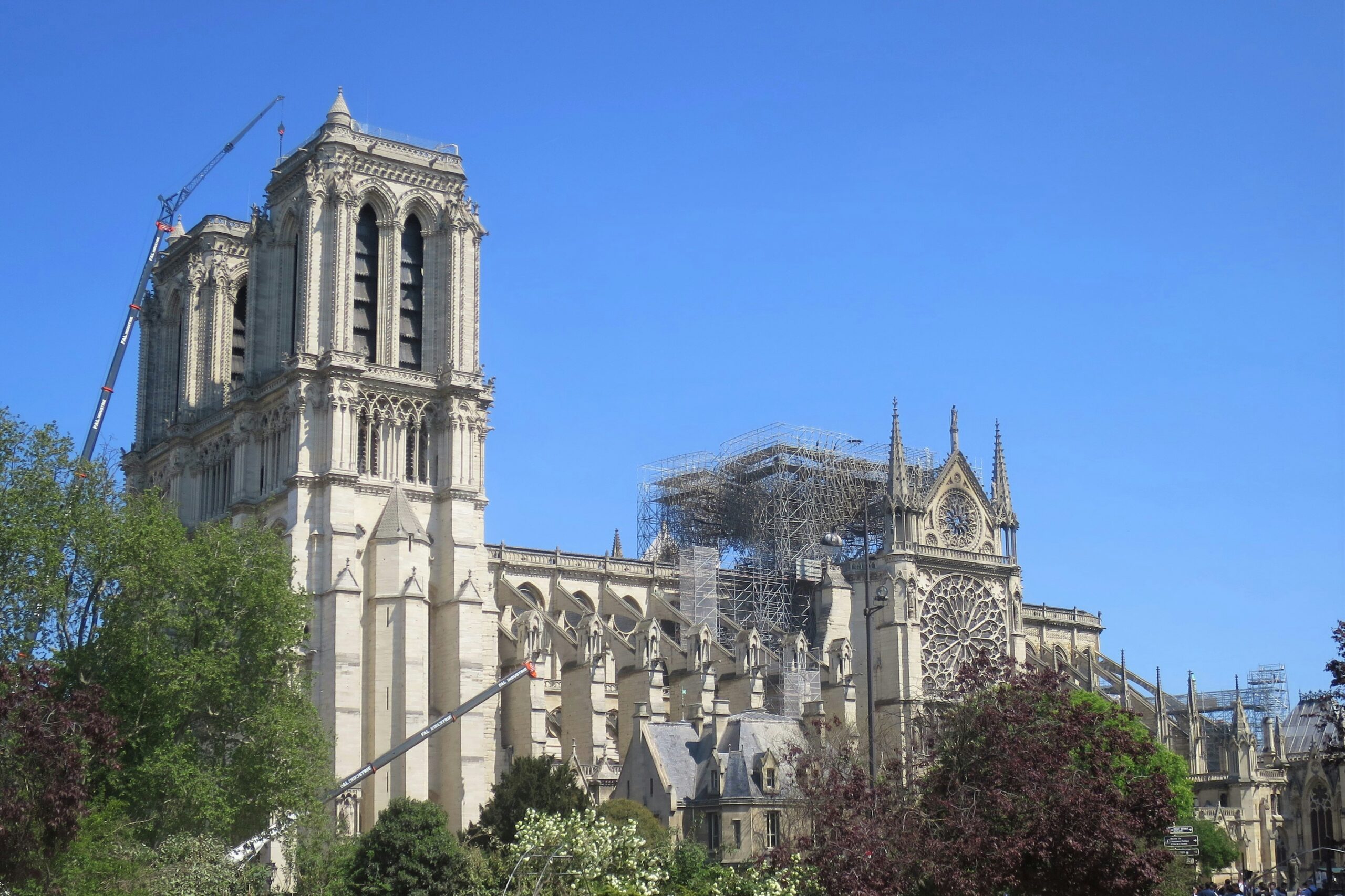
Notre-Dame de Paris stands as one of the world’s most iconic cathedrals, a masterpiece of French Gothic architecture that has witnessed nearly nine centuries of history. Its soaring spires, intricate stone carvings, and majestic stained glass have drawn millions of visitors, making it a symbol of Paris, France, and European heritage. The devastating fire of April 15, 2019, shocked the world, raising urgent questions about preservation and resilience. This article explores the complete history and significance of Notre-Dame Cathedral before and after the fire, tracing its evolution from medieval marvel to modern monument.
Table des matières:
The Foundation and Construction of Notre-Dame
The story of Notre-Dame begins in 1163, when Bishop Maurice de Sully initiated its construction on the Île de la Cité, the historic heart of Paris. Built on the site of earlier Christian churches, the cathedral was intended to reflect the growing power and piety of medieval France. Construction spanned over 180 years, with major phases completed by the mid-13th century, though modifications continued for centuries.
Architectural Innovations and Design
Notre-Dame pioneered key elements of Gothic architecture, which emphasized height, light, and structural innovation. Its design featured:
- Flying Buttresses: External supports that allowed for taller walls and larger windows, a defining feature of Gothic cathedrals.
- Rose Windows: Three magnificent stained-glass windows, notably the north and south roses from the 13th century, depicting biblical scenes.
- The Nave and Choir: A spacious interior with a rib-vaulted ceiling, creating a sense of verticality and divine aspiration.
These elements combined to make Notre-Dame a benchmark for cathedral design across Europe.
Historical Significance Through the Centuries
Notre-Dame has been a silent witness to pivotal moments in French and world history. Its significance extends far beyond architecture, embedding it in the cultural and political fabric of France.
Medieval and Renaissance Era
In the Middle Ages, Notre-Dame served as a center for religious life, hosting coronations, royal weddings, and public gatherings. It was here that Henry VI of England was crowned King of France in 1431 during the Hundred Years’ War. The cathedral also housed precious relics, such as the Crown of Thorns, attracting pilgrims from across Christendom.
The French Revolution and Restoration
The French Revolution (1789–1799) brought turmoil to Notre-Dame. Revolutionaries damaged statues, stripped lead from the roof for ammunition, and repurposed the building as a Temple of Reason, then a warehouse. This period of neglect threatened its survival until the 19th century.
Victor Hugo and the Gothic Revival
Notre-Dame’s fortunes changed with Victor Hugo’s 1831 novel, The Hunchback of Notre-Dame. The book highlighted the cathedral’s decay and sparked public interest in its preservation. This led to a major restoration campaign (1844–1864) led by architect Eugène Viollet-le-Duc, who added new elements like the iconic spire and gargoyles, blending historical accuracy with creative interpretation.
Notre-Dame as a Cultural and Religious Icon
By the 20th and 21st centuries, Notre-Dame had cemented its status as a global symbol. It was designated a UNESCO World Heritage site in 1991, recognizing its outstanding universal value. Key aspects of its significance include:
- Religious Role: As the cathedral of the Archdiocese of Paris, it hosted masses, including memorial services for figures like Charles de Gaulle.
- Tourist Attraction: Drawing an estimated 12–14 million visitors annually, it boosted Paris’s economy and cultural appeal.
- Artistic Inspiration: Featured in countless paintings, films, and literary works, from Impressionist art to Disney adaptations.
This multifaceted importance made the cathedral a beloved landmark, integral to France’s identity.
The Devastating Fire of April 15, 2019
On the evening of April 15, 2019, a fire broke out in the attic of Notre-Dame during renovation work. Fueled by ancient timber beams, the blaze quickly engulfed the roof and spire, visible across Paris. Firefighters battled for hours to save the structure, preventing total collapse but causing extensive damage.
Immediate Impact and Losses
The fire resulted in significant destruction, though many treasures were spared. Key losses and survivals included:
- Destroyed: The 19th-century oak spire (flèche), most of the roof (the “forest” of medieval timber), and parts of the vaulting.
- Saved: The main structure, towers, façade, and most artworks, thanks to a human chain that rescued relics like the Crown of Thorns.
- Damaged: Some stained glass and stonework suffered heat and water damage.
The event triggered an outpouring of grief globally, with leaders and citizens expressing solidarity.
Investigation and Causes
French authorities launched an investigation, pointing to electrical faults or negligence linked to renovation as likely causes. No evidence of foul play was found, highlighting risks in maintaining historic buildings.
After the Fire: Recovery and Reconstruction
The aftermath of the fire has been marked by ambitious efforts to restore Notre-Dame, blending tradition with modern techniques. This phase underscores its enduring significance and the challenges of preservation.
Initial Stabilization and Planning
In the days following the fire, workers installed temporary supports to prevent collapse. President Emmanuel Macron pledged to rebuild within five years, aiming for completion by the 2024 Paris Olympics. A global fundraising campaign raised over €1 billion, though debates arose over design choices and costs.
Reconstruction Efforts and Innovations
Reconstruction has involved meticulous processes to honor Notre-Dame’s heritage while ensuring safety. Key steps include:
- Debris Removal: Carefully sorting materials for reuse, such as melted lead from the roof.
- Oak Timber Sourcing: Selecting centuries-old oak trees from French forests to recreate the roof framework, using traditional carpentry methods.
- Technological Aids: Employing 3D scans and digital models from pre-fire surveys to guide restoration.
Controversies emerged, such as whether to replicate Viollet-le-Duc’s spire exactly or incorporate modern elements, reflecting broader tensions between conservation and innovation.
Cultural and Symbolic Resilience
Notre-Dame’s recovery has become a symbol of resilience, mirroring France’s ability to overcome crises. Temporary exhibitions and virtual tours have kept public engagement alive, while the cathedral’s role in events like the 2024 Olympics is anticipated to mark its rebirth.
Conclusion: Reflecting on History and Significance
The history and significance of Notre-Dame Cathedral before and after the fire reveal a monument that has continually adapted through centuries of change. From its Gothic origins to its near-destruction in 2019, it embodies artistic achievement, historical memory, and communal identity. The fire, while tragic, has renewed global appreciation for cultural heritage, sparking dialogues on preservation ethics and technical ingenuity. As reconstruction progresses, Notre-Dame stands not just as a stone edifice, but as a testament to human creativity and endurance. Its story reminds us that even in ashes, legacy can inspire renewal, ensuring that future generations will continue to ponder what is the history and significance of Notre-Dame Cathedral.
Photo by Chris Linnett on Unsplash