

Table des matières:
Why Consider the University of Florence for Arts and Humanities?
The University of Florence (Università degli Studi di Firenze) is one of Italy’s oldest and most prestigious institutions, founded in 1321. Located in the heart of the Renaissance, Florence itself is a living museum of art, architecture, and culture. For students passionate about arts and humanities, the university offers an immersive academic environment that blends rigorous scholarship with direct access to masterpieces by Michelangelo, Leonardo da Vinci, and Botticelli.
But is the University of Florence good for arts and humanities? The short answer is yes—and here’s why. The university boasts a strong reputation in fields such as art history, archaeology, philosophy, literature, and cultural heritage. Its faculty includes leading scholars, and its partnerships with museums like the Uffizi Gallery and the Bargello provide unique research and internship opportunities.
However, like any institution, it has strengths and weaknesses. This guide will help you decide if it’s the right fit for your academic and career goals.
Academic Strengths and Program Offerings
Undergraduate and Graduate Programs
The University of Florence offers a wide range of degree programs in arts and humanities. Notable undergraduate programs include:
- Scienze dei Beni Culturali (Cultural Heritage Sciences) – focuses on conservation, management, and valorization of cultural assets.
- Lettere (Literature) – covers Italian literature, classical philology, and modern languages.
- Storia dell’Arte (Art History) – emphasizes Renaissance art but also covers medieval, modern, and contemporary periods.
- Filosofia (Philosophy) – strong in theoretical philosophy, ethics, and history of philosophy.
Graduate programs include specialized master’s degrees in archaeology, museum studies, archival science, and digital humanities. Many courses are taught in Italian, though some master’s programs are offered in English to attract international students.
Research and Faculty Excellence
The university’s research output in humanities is strong, with several departments ranking among the top in Italy. Professors are often active in international projects, such as the excavation of Etruscan sites or the digitization of Renaissance manuscripts. Students benefit from small class sizes in advanced seminars and direct mentorship from experts.
One unique advantage is the Scuola di Studi Umanistici e della Formazione (School of Humanities and Education), which integrates interdisciplinary approaches across history, philosophy, and education sciences.
Location and Cultural Immersion
Florence as a Classroom
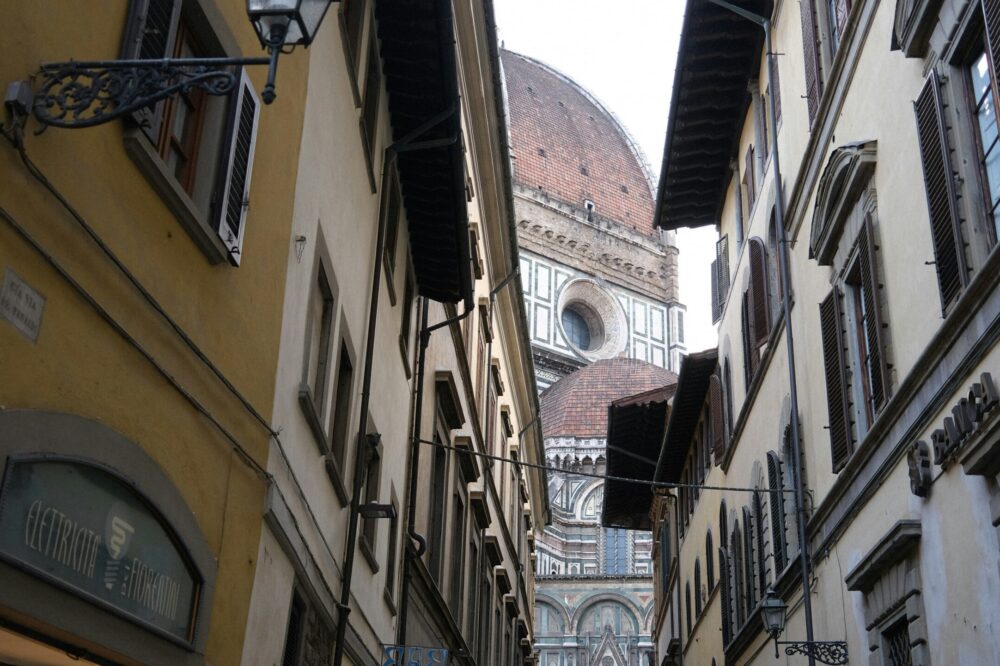
Florence is arguably the world’s greatest open-air museum for arts and humanities students. The city is home to:
- The Uffizi Gallery – with works by Botticelli, da Vinci, and Raphael.
- The Accademia Gallery – Michelangelo’s David.
- The Duomo, Santa Croce, and countless Renaissance palaces.
Many courses incorporate site visits, giving students firsthand experience with original artworks and historical documents. For art historians, this is invaluable. Philosophy and literature students can explore the libraries and archives that once housed Dante, Petrarch, and Machiavelli.
Networking and Internship Opportunities
The university has formal agreements with local cultural institutions, including the Opificio delle Pietre Dure (a renowned restoration lab), the Biblioteca Nazionale Centrale, and the Museo di Storia Naturale. Students can apply for internships that provide practical skills in conservation, curation, and research. These experiences often lead to job offers or further academic positions.
Student Life and Support Services
Campus and Facilities
The main humanities campus is located in the historic center, near Piazza San Marco. Facilities include modern lecture halls, computer labs, and specialized libraries. The Biblioteca Umanistica holds over a million volumes and rare manuscripts. However, some buildings are old and may lack the sleekness of newer universities—this is part of the charm for many students.
International Community
Approximately 10% of the student body is international, creating a diverse environment. The university offers Italian language courses for foreigners, orientation programs, and a buddy system to help newcomers adjust. The Erasmus+ program is popular, with exchange agreements across Europe.
Cost of Living and Scholarships
Florence is more expensive than other Italian cities like Bologna or Padua, but still affordable compared to London or New York. Monthly costs (rent, food, transport) average €800–1,200. The university offers merit-based scholarships and fee waivers through the DSU Toscana regional agency. International students can also apply for Italian government scholarships.
Comparison with Other Italian Universities



| University | Strengths in Arts & Humanities | Location Advantage | International Reputation |
|---|---|---|---|
| University of Florence | Art history, cultural heritage, literature | Florence (Renaissance hub) | High in art history; moderate overall |
| University of Bologna | History, philosophy, classics | Bologna (medieval city) | Very high (oldest university) |
| University of Rome La Sapienza | Archaeology, classics, modern literature | Rome (ancient and Baroque) | High in classics and archaeology |
| Ca’ Foscari University of Venice | Art history, conservation, languages | Venice (unique cultural setting) | Moderate; strong in conservation |
As the table shows, the University of Florence excels particularly in art history and cultural heritage, thanks to its location and partnerships. If your focus is on Renaissance art or museum studies, Florence is hard to beat.
Career Prospects for Graduates
Alumni Success Stories
Graduates from the University of Florence’s arts and humanities programs have gone on to become museum curators, art restorers, archivists, teachers, and researchers. Notable alumni include art historian Antonio Paolucci (former director of the Vatican Museums) and writer Dario Fo (Nobel laureate in literature).
Skills and Employability
The university emphasizes critical thinking, research methods, and language skills. Many programs require a thesis or practical project, which builds a portfolio. However, humanities graduates often face a competitive job market. The university’s career office offers workshops on CV writing, interview skills, and job placement, but proactive networking is essential.
Fields where graduates find employment include:
- Museums and galleries
- Cultural heritage management
- Publishing and journalism
- Teaching (with additional certification)
- Tourism and cultural tourism
Practical Checklist: Is It Right for You?
Before applying, consider this checklist:
- ☐ Are you passionate about Renaissance art and Italian culture?
- ☐ Are you willing to learn Italian (most bachelor’s courses are in Italian)?
- ☐ Do you prefer a historic university environment over modern campuses?
- ☐ Can you handle the higher cost of living in Florence?
- ☐ Are you looking for a program with strong international recognition in art history?
If you answered yes to most, the University of Florence could be an excellent choice.
Frequently Asked Questions
Is the University of Florence good for arts and humanities?
Yes, it is highly regarded, especially in art history, cultural heritage, and literature. Its location in Florence provides unmatched access to Renaissance art and archives.
Are there English-taught programs in arts and humanities?
Some master’s programs are taught in English, such as the Master in Archaeology and the Master in Museum Studies. Most bachelor’s programs are in Italian.
What is the acceptance rate for international students?
The university does not publish a single acceptance rate. Admission is based on meeting requirements (e.g., language proficiency, previous grades) and sometimes a test. For popular programs, competition can be moderate.
How much does it cost to study at the University of Florence?
Tuition fees range from €1,000 to €2,500 per year for EU students and slightly higher for non-EU students. Scholarships and fee waivers are available based on income and merit.
Can I work while studying?
International students can work up to 20 hours per week during the academic year. Part-time jobs in tourism, language tutoring, or hospitality are common in Florence.
What are the top research areas in humanities at Florence?
Key areas include Renaissance art history, Etruscan archaeology, medieval philosophy, Italian literature, and digital humanities. The university hosts several research centers, such as the Centro di Studi sul Rinascimento.
Next Steps: How to Apply and Prepare
If you’re convinced that the University of Florence is the right place for your arts and humanities studies, here’s what to do next:
- Check program requirements on the university’s official website. Note language prerequisites: most bachelor’s programs require B2 Italian, while master’s programs in English require C1 English.
- Prepare your documents: transcripts, CV, motivation letter, and language certificates. Some programs require a portfolio or writing sample.
- Apply through the Universitaly portal for international students. Deadlines vary by program but typically fall between March and June for fall intake.
- Arrange housing early, as student accommodation in Florence is competitive. Options include dormitories (through DSU Toscana), private rentals, or shared apartments.
- Apply for scholarships through DSU Toscana or the Italian Ministry of Foreign Affairs. Deadlines often coincide with admission deadlines.
Remember: studying arts and humanities in Florence is not just an academic journey—it’s a cultural immersion that can shape your worldview. The University of Florence offers a solid foundation, but your success will depend on your engagement with the city’s resources and your proactive networking. So, is the University of Florence good for arts and humanities? Absolutely—if you make the most of it.
Photo by Briam-Cute on Pixabay

The location sounds incredible for art history students, but I’m worried about the cost of living in Florence. Any tips?
Florence can be pricey, but as a student you can save by using university housing, cooking at home, and taking advantage of student discounts at museums and transport. Many students also find part-time work in tourism or language tutoring.
This guide is really helpful. I was wondering how competitive the admissions are for international students in the humanities programs.
Admission varies by program, but generally the University of Florence is welcoming to international students. For popular programs like Art History, you’ll need a strong academic record and language proficiency (Italian or English depending on the course). It’s a good idea to prepare your application early.
I’m considering applying for the Art History master’s program. Are there any English-taught courses in that field?
Yes, the University of Florence offers some master’s programs in English, including in art history and museum studies. It’s best to check the specific program page for the most up-to-date language requirements.