

Table des matières:
Is Nice on the French Riviera? The Short Answer
Yes, Nice is absolutely part of the French Riviera. In fact, Nice is often considered the capital of the French Riviera, also known as the Côte d’Azur. This glamorous stretch of Mediterranean coastline in southeastern France runs from Saint-Tropez to the Italian border, and Nice sits right at its center.
If you’re planning a trip to the south of France, you’ll find that Nice offers the perfect mix of city energy, beach relaxation, and easy access to nearby glamour spots like Cannes and Monaco. But let’s dig deeper into what makes Nice the heart of the French Riviera.
What Exactly Is the French Riviera?
The French Riviera, or Côte d’Azur, is not an official administrative region but a cultural and geographical area. It stretches roughly along the Mediterranean coast from the town of Cassis near Marseille eastward to the Italian border. The term “Côte d’Azur” was coined in the 19th century by French writer Stéphen Liégeard in his book of the same name, referring to the azure blue waters.
Key cities and towns that are considered part of the French Riviera include:
- Saint-Tropez
- Cannes
- Antibes
- Nice
- Monaco (though a sovereign state, it’s geographically within the Riviera)
- Menton
Nice is not only part of this region but also its largest city and a major hub for tourism, business, and culture.
Why Is Nice Called the Capital of the French Riviera?
Nice earned the title “capital of the French Riviera” due to its size, history, and central location. With a population of over 340,000 (and over 1 million in the metro area), it’s the biggest city on the coast. Its international airport, Nice Côte d’Azur Airport, is the main gateway for visitors to the region. Plus, Nice has a rich history as a winter resort for European aristocracy in the 19th century, which helped establish the Riviera’s reputation as a glamorous destination.
Where Is Nice Located on the French Riviera?
Nice sits on the southeastern coast of France, nestled between the Mediterranean Sea and the foothills of the Alps. It’s about 13 kilometers (8 miles) from the Italian border and 30 kilometers (19 miles) west of Monaco. The city is built around the beautiful Baie des Anges (Bay of Angels), with its famous Promenade des Anglais stretching along the waterfront.
This location makes Nice an ideal base for exploring the entire French Riviera. You can easily take day trips to:
- Cannes – 30 minutes by train
- Monaco – 20 minutes by train
- Antibes – 15 minutes by train
- Saint-Tropez – 1.5 hours by car or boat
- Menton – 30 minutes by train
What Makes Nice a True Riviera Destination?
When people think of the French Riviera, they imagine turquoise waters, palm trees, luxury yachts, and elegant architecture. Nice delivers all of that and more. Here are the key features that cement Nice’s place on the Riviera:
1. The Beaches
Nice’s beaches are iconic, though they are mostly pebbly (galets) rather than sandy. The most famous stretch is the Promenade des Anglais, a 7-kilometer pedestrian walkway lined with blue chairs and palm trees. Public beaches are free, but there are also private beach clubs where you can rent sun loungers and enjoy waiter service.
2. The Promenade des Anglais
This legendary seaside boulevard is the heart of Nice. Built by English aristocrats in the 19th century, it’s perfect for walking, cycling, or rollerblading while enjoying sea views. It’s also where you’ll find luxury hotels like the Negresco.
3. The Old Town (Vieux Nice)
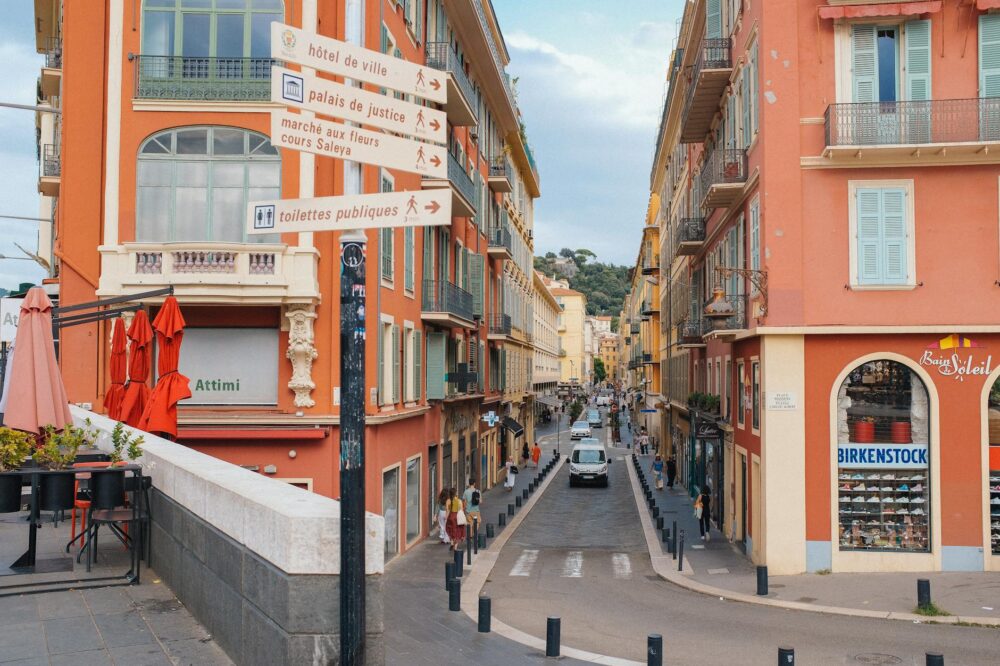
With narrow, winding streets, colorful buildings, and bustling markets, Vieux Nice offers a taste of authentic Provençal life. The Cours Saleya market is a must-visit for flowers, fresh produce, and local specialties.
4. The Cuisine
Nice is famous for its Niçoise cuisine, which includes dishes like salade niçoise, socca (chickpea pancake), pissaladière (onion tart), and ratatouille. The local food scene blends French and Italian influences, reflecting the city’s proximity to Italy.
5. The Climate
The French Riviera is known for its mild winters and warm summers, and Nice is no exception. With over 300 days of sunshine a year, it’s a year-round destination. The average temperature in summer is around 27°C (80°F), and in winter it rarely drops below 10°C (50°F).
How Does Nice Compare to Other French Riviera Destinations?
Each town on the Riviera has its own character. Here’s a quick comparison to help you understand Nice’s unique appeal:
| Destination | Vibe | Best For |
|---|---|---|
| Nice | City + beach, cultural hub | First-time visitors, food lovers, history buffs |
| Cannes | Glamorous, festival-focused | Luxury shopping, film festival, nightlife |
| Monaco | Ultra-wealthy, casinos | High-end gambling, yachting, Grand Prix |
| Saint-Tropez | Exclusive, beach clubs | Celebrity spotting, beach parties |
| Antibes | Historic, family-friendly | Old town, Picasso Museum, beaches |
| Menton | Quiet, Italianate | Gardens, lemon festival, relaxation |
Nice stands out as the most complete destination—it offers city life, beaches, culture, and easy access to everywhere else.
Common Misconceptions About Nice and the French Riviera
Let’s clear up a few myths:
- Myth: The French Riviera is only for the ultra-rich. While there are luxury elements, Nice has plenty of affordable options for accommodations, dining, and activities.
- Myth: Nice is just a beach town. Nice is a major city with world-class museums (like the Matisse Museum and Marc Chagall Museum), a vibrant arts scene, and excellent shopping.
- Myth: The best beaches are in Nice. Nice’s beaches are nice, but if you prefer sand, head to Antibes or Cannes. For quieter spots, try Villefranche-sur-Mer or Cap d’Ail.
Practical Tips for Visiting Nice on the French Riviera
Getting There
Nice Côte d’Azur Airport is the second busiest in France, with flights from all over Europe and beyond. From the airport, you can take the tram (Line 2) to the city center in about 30 minutes. Trains from Paris take around 5.5 hours, and there are direct TGV services.
Getting Around
Nice has an efficient tram system, buses, and a train station (Nice-Ville) that connects to other Riviera towns. Walking is the best way to explore the city center. For day trips, the train is your best bet.
Best Time to Visit
The peak season is July and August, when the weather is hottest and crowds are largest. For a more pleasant experience, visit in May-June or September-October when temperatures are warm but not scorching, and accommodation prices are lower.
What to Pack
For summer: light clothing, swimwear, sunscreen, a hat, and comfortable walking shoes. For winter: a light jacket or sweater, as evenings can be cool. Don’t forget a reusable water bottle—there are public water fountains throughout the city.
Checklist: Is Nice the Right Choice for You?
Use this checklist to decide if Nice is your ideal French Riviera base:
- ☐ You want a mix of city and beach in one destination.
- ☐ You enjoy exploring historic neighborhoods and museums.
- ☐ You plan to take day trips to Cannes, Monaco, or Antibes.
- ☐ You prefer pebble beaches over sandy ones (or don’t mind).
- ☐ You want excellent public transportation options.
- ☐ You’re looking for a wide range of restaurants and nightlife.
If you checked most of these boxes, Nice is perfect for you!
FAQs About Nice and the French Riviera
Is Nice considered part of the South of France?
Yes, Nice is in the Provence-Alpes-Côte d’Azur region, which is the southeastern part of France, commonly referred to as the South of France.
Is Nice more French or Italian?
Nice has a strong Italian influence due to its proximity to Italy and history as part of the Kingdom of Sardinia until 1860. The local dialect, Niçois, is closely related to Italian. However, the city is thoroughly French in culture and administration.
Can you swim in the sea in Nice?
Yes, you can swim at Nice’s beaches from May to October. The water is clean, and lifeguards are on duty during summer. Some beaches have designated swimming areas.
What is the best way to explore the French Riviera from Nice?
The train is the most convenient and scenic way. The TER train line runs along the coast from Cannes to Ventimiglia (Italy), with frequent stops. You can also take buses or rent a car, but parking can be challenging in coastal towns.
Is Nice expensive?
Nice is more affordable than Monaco or Saint-Tropez but pricier than inland towns. Budget travelers can find hostels and eat at local markets, while luxury options are also abundant. Overall, it offers good value for a Riviera destination.
What are the must-see attractions in Nice?
Top attractions include the Promenade des Anglais, Old Town (Vieux Nice), Castle Hill (Colline du Château) for panoramic views, the Russian Orthodox Cathedral, and the Marc Chagall National Museum.
Make the Most of Your Visit to Nice, the Heart of the French Riviera
Now you know the answer: Nice is not only part of the French Riviera—it’s its beating heart. Whether you’re soaking up the sun on the pebble beach, wandering through the colorful market in Old Town, or sipping a pastis at a sidewalk café, you’ll experience the essence of the Côte d’Azur.
To truly enjoy Nice, embrace its dual personality: a sophisticated resort city with a down-to-earth local vibe. Don’t rush; take time to stroll, taste the socca, and watch the sunset over the Baie des Anges. And if you have a few extra days, use Nice as your springboard to explore the rest of the Riviera.
Book your trip with confidence—Nice is waiting to welcome you to the French Riviera.

This article confirms what I suspected—Nice really is the heart of the Riviera. I’m thinking of basing my trip there. How easy is it to take day trips to Monaco and Cannes by train?
Very easy! Nice has excellent train connections. The TER train to Monaco takes about 20 minutes, and to Cannes about 30 minutes. Trains run frequently from Nice-Ville station. It’s a convenient and scenic way to explore.
Does Nice have sandy beaches or are they all pebbly? I’m planning a trip with kids.
Most beaches in Nice are pebbly (galets), but there are a few sandy options. For example, the beach at Coco Beach has sand, and you can also find sandy stretches in nearby towns like Antibes or Villefranche-sur-Mer. Water shoes are recommended for the pebbly beaches.
Great overview! I’ve always wondered if Nice is considered part of the Riviera or just nearby. Good to know it’s the capital.
Glad it helped! Nice is indeed the largest city on the Riviera and often called its capital. Its central location, airport, and history make it a perfect gateway for exploring the entire Côte d’Azur.
I’m confused about the difference between French Riviera and Côte d’Azur. Are they exactly the same?
Yes, they refer to the same region. French Riviera is the English term, while Côte d’Azur is the French name. Both describe the Mediterranean coastline from Cassis or Saint-Tropez to the Italian border. Nice is right in the middle.