Table des matières:
Introduction
Strasbourg, the capital of the Alsace region in eastern France, boasts a history that spans over two millennia. Its unique position on the border between France and Germany has made it a crossroads of cultures, languages, and conflicts. Understanding what is the history of Strasbourg reveals a story of resilience, transformation, and European unity.
Roman Origins and Early Medieval Period
Argentoratum: The Roman Military Camp
The history of Strasbourg begins around 12 BC when the Romans established a military camp called Argentoratum. Located on the site of the modern city center, it served as a strategic outpost on the Rhine frontier. The camp grew into a small town with typical Roman amenities: baths, temples, and a forum.
Barbarian Invasions and the Rise of the City
In the 5th century, the Roman Empire declined, and Strasbourg faced invasions by Alemanni, Huns, and Franks. By the 6th century, the city became part of the Frankish kingdom. The name Strasbourg first appeared in 589 AD, derived from the German words for ‘road’ and ‘fortress.’
Strasbourg in the Holy Roman Empire
A Free Imperial City
In 1262, after the Battle of Hausbergen, Strasbourg gained status as a Free Imperial City within the Holy Roman Empire. This autonomy allowed the city to flourish economically and politically. The bourgeoisie gained power, and the city became a center of trade and commerce along the Rhine.
The Cathedral and the Printing Press
Construction of the Strasbourg Cathedral began in 1015, but the iconic Gothic structure we see today was built between the 12th and 15th centuries. Completed in 1439, it was the world’s tallest building until the 19th century. In 1440, Johannes Gutenberg developed the printing press in Strasbourg, revolutionizing information dissemination.
The Reformation and Religious Conflicts
Adoption of Protestantism
In the 1520s, Strasbourg embraced the Protestant Reformation under leaders like Martin Bucer. The city became a haven for religious refugees, including John Calvin, who spent three years there. The University of Strasbourg, founded in 1538, became a center of humanist learning.
The Thirty Years’ War and French Annexation
During the Thirty Years’ War (1618-1648), Strasbourg remained neutral but suffered economic decline. In 1681, King Louis XIV of France annexed the city, forcing the Catholic Church to regain control. The Cathedral was returned to Catholicism, and the city’s political status changed dramatically.
From French Revolution to Franco-Prussian War
Revolution and Napoleonic Era
Strasbourg supported the French Revolution, and the city’s citizens stormed the city hall in 1789. Under Napoleon, Strasbourg prospered as a garrison town. The famous ‘Marseillaise’ was composed here in 1792 by Claude Joseph Rouget de Lisle.
The Franco-Prussian War and German Rule
In 1870, during the Franco-Prussian War, Strasbourg was besieged and bombarded. After France’s defeat, the city became part of the German Empire under the Treaty of Frankfurt (1871). German authorities modernized the city, expanding its port and building the Neustadt (new town) district.
World Wars and the Struggle for Identity
World War I and the Return to France
During World War I, Strasbourg remained under German control, but many citizens retained French sympathies. After the war, the Treaty of Versailles (1919) returned Alsace-Lorraine to France. Strasbourg underwent a rapid ‘re-Frenchification’ process.
World War II and Nazi Occupation
In 1940, Nazi Germany invaded and annexed Alsace. Strasbourg was incorporated into the Gau Baden, and residents faced forced Germanization. The Gestapo used the city as a base. The city was liberated by French forces in November 1944.
Post-War Reconstruction and European Capital
Rebuilding and Reconciliation
After the war, Strasbourg was rebuilt with a focus on Franco-German reconciliation. The city became a symbol of European unity. In 1949, the Council of Europe was established here, and in 1952, the European Parliament held its first session in Strasbourg.
The European Institutions Today
Today, Strasbourg hosts the European Parliament, the Council of Europe, and the European Court of Human Rights. It is a major center for international diplomacy and attracts thousands of visitors annually.
Cultural Heritage and Landmarks
Architectural Highlights
- Strasbourg Cathedral: A masterpiece of Gothic architecture with a single spire.
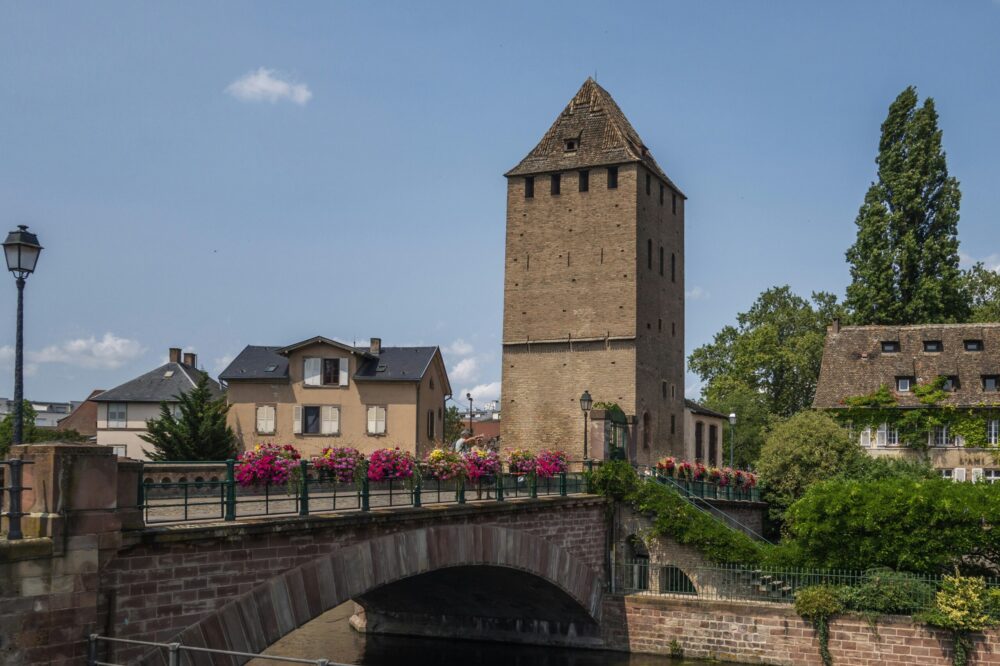
- La Petite France: A picturesque district with half-timbered houses and canals.
- Palais Rohan: A Baroque palace housing museums.
- Neustadt: A 19th-century German-inspired district with grand buildings.
Cultural Events
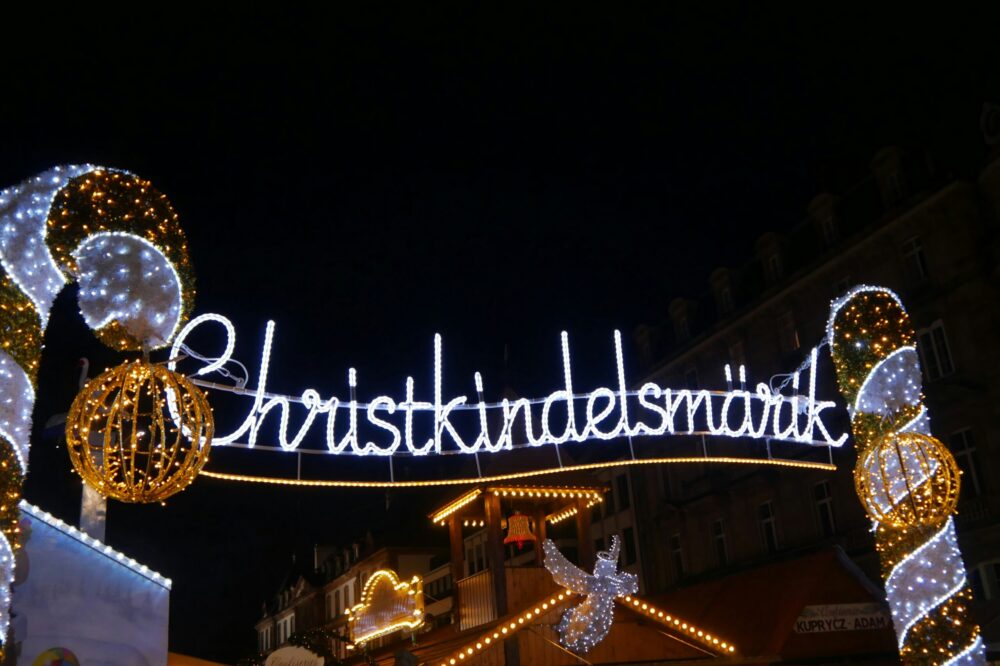
Strasbourg is famous for its Christmas market, one of the oldest in Europe. The city also hosts the Strasbourg Music Festival and the Strasbourg International Film Festival.
Conclusion
In summary, what is the history of Strasbourg? It is a tale of two millennia marked by Roman foundations, medieval prosperity, religious upheaval, annexations, wars, and rebirth as a beacon of European cooperation. Strasbourg’s unique blend of French and German influences, its stunning architecture, and its role as a capital of Europe make it a fascinating city with a rich and complex past.
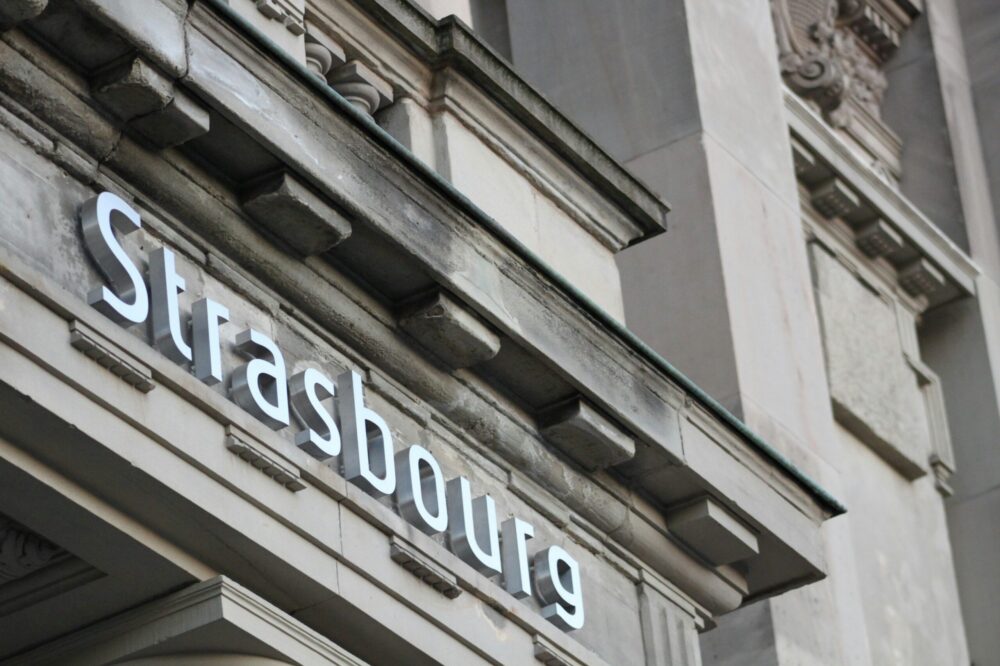
Photo by Ana Kusmuk on Unsplash