

Table des matières:
Economics Programs at Nice Universities: An Overview
If you are searching for economics programs in Nice, France, you are likely considering Université Côte d’Azur (UCA) and its affiliated schools. Nice offers a range of economics degrees from bachelor to doctorate, with specializations in international economics, monetary economics, and data analysis. This guide covers the main programs, admission requirements, and what makes studying economics in Nice unique.
Why Study Economics in Nice?
Nice combines a high-quality academic environment with a vibrant Mediterranean lifestyle. Université Côte d’Azur is a member of the prestigious UCA JEDI initiative, focusing on interdisciplinary excellence. The economics faculty includes researchers from the GREDEG and OFCE labs, offering strong ties to policy and industry. Additionally, Nice’s proximity to Monaco and Italy provides unique opportunities for internships in finance, tourism, and international trade.
Undergraduate Economics Programs
Bachelor in Economics (Licence Économie)
The three-year Licence in Economics at UCA covers microeconomics, macroeconomics, statistics, and econometrics. Students choose from tracks like International Economics or Monetary and Financial Economics. The program is taught in French, with some elective courses in English.
Double Degrees and International Options
UCA offers double degrees with local business schools and partner universities abroad. For example, the Licence Économie-Gestion combines economics with management. Exchange programs with universities in Canada, the US, and Europe are available through Erasmus+.
Master’s Programs in Economics
Master in Economics (Parcours Recherche)
This two-year research-oriented master prepares students for PhD studies. It includes advanced microeconomics, macroeconomics, and econometrics, with seminars led by faculty from GREDEG. Students must write a master’s thesis. The program is taught in English and French.
Master in International Economics and Finance
A professional track focusing on global markets, risk management, and financial analysis. It includes a compulsory internship and is often taught in English. Graduates work in banks, consulting firms, and international organizations.
Master in Data Science and Economics
This interdisciplinary program combines economics with big data analytics, machine learning, and programming (Python, R). It is offered jointly with the computer science department. Ideal for careers in tech and analytics.
PhD and Research Opportunities
The doctoral school in economics at UCA hosts about 40 PhD students. Research areas include behavioral economics, industrial organization, and environmental economics. Funding is available through UCA JEDI scholarships and French government grants. PhD candidates work closely with GREDEG or OFCE labs.
Admission Requirements and Application Process
- Bachelor’s: French baccalaureate or equivalent, with strong math background. For international students, DELF B2 in French is required.
- Master’s: Relevant bachelor’s degree, transcript, CV, motivation letter, and two recommendation letters. English proficiency (IELTS 6.5 or TOEFL 90) for English-taught programs.
- PhD: Master’s degree in economics, research proposal, and interview.
Applications are submitted via the Études en France or Campus France platforms. Deadlines vary: typically January–March for master’s and May–June for bachelor’s.


Tuition Fees and Scholarships
| Program | Tuition (EU/EEA) | Tuition (Non-EU) |
|---|---|---|
| Bachelor | €170/year | €2,770/year |
| Master | €243/year | €3,770/year |
| PhD | €380/year | €380/year |
Scholarships include the Eiffel Excellence Scholarship, UCA JEDI grants, and region-specific aid. Non-EU students may be eligible for partial waivers.
Career Prospects After Graduation
Graduates from Nice’s economics programs find jobs in banking, insurance, consulting, and public administration. The local economy, driven by tourism and technology, offers opportunities with companies like Amadeus, Allianz, and the Monaco government. The university’s career center organizes job fairs and networking events.
Comparison with Other French Universities
Compared to Paris or Toulouse, Nice offers smaller class sizes, a more personalized approach, and lower cost of living. However, it may have fewer research labs than larger universities. For students interested in Mediterranean economies or European finance, Nice is an excellent choice.
Frequently Asked Questions
Are economics programs in Nice taught in English?
Yes, several master’s programs are fully taught in English, including the Master in International Economics and Finance. Bachelor’s programs are primarily in French.
What is the ranking of Université Côte d’Azur for economics?
UCA ranks among the top 300 globally in economics according to the Shanghai Ranking. It is well-regarded for its research output in behavioral and experimental economics.
Can I work while studying economics in Nice?
International students can work up to 964 hours per year. Part-time jobs in hospitality or tutoring are common. The university also offers internships integrated into programs.
What is the cost of living in Nice?
Expect around €800–1,200 per month for rent, food, and transport. Student housing is available at CROUS residences (€300–500/month).
How do I apply for a student visa?
After receiving your acceptance letter, apply for a long-stay student visa at the French consulate. You’ll need proof of financial resources (€615/month) and health insurance.
Are there exchange programs for economics students?
Yes, UCA has partnerships with over 100 universities worldwide. Students can spend a semester abroad through Erasmus+ or bilateral agreements.
Your Next Steps: Choosing an Economics Program in Nice
To decide, start by identifying your career goals: research, finance, or data. Visit the UCA website for detailed course descriptions. Contact the international office for application guidance. Prepare your language certificates early. Consider visiting Nice during open days in February. With its sunny climate and strong academic foundation, Nice is a smart choice for economics studies.
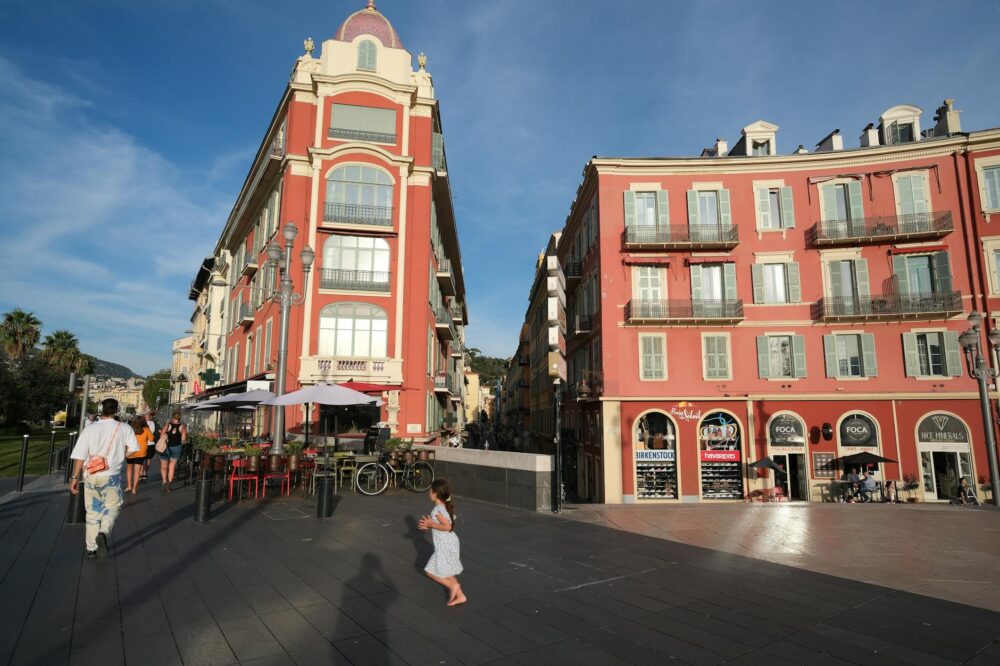
Photo by QI_Jeffrey on Pixabay



The Master in Data Science and Economics sounds interesting. Is it more economics or computer science focused?
It’s genuinely interdisciplinary: you’ll take core economics courses alongside data science modules like machine learning and Python. The goal is to equip you for roles where economic analysis meets big data.
Are the bachelor’s programs taught entirely in French? I’m an international student with intermediate French.
Yes, the Licence Économie is primarily taught in French, though some elective courses are in English. You’ll need B2-level French for admission. Consider taking a language course beforehand if needed.
Are there any English-taught bachelor’s programs in economics at UCA?
Currently, the economics bachelor’s is taught in French. However, UCA offers some English-taught programs in other fields, and there are double degrees with partners where courses may be in English. For economics, you’ll need French proficiency at the B2 level.
I’m interested in the PhD program. What is the typical funding package?
PhD students typically receive a monthly stipend of around €1,400–1,800 from sources like UCA JEDI or French government grants. The doctoral school also covers research expenses and travel for conferences.
What is the tuition for these programs? Are there scholarships available?
For EU students, bachelor’s tuition is around €170 per year; master’s is about €243. Non-EU fees are higher but still reasonable compared to other countries. UCA JEDI scholarships and French government grants are available for PhD students, and some master’s programs offer merit-based aid.
What is the class size like for economics courses?
Lecture classes for core modules can be large (up to 200 students), but tutorials and seminars are smaller (20–30). Master’s classes are even more intimate, fostering close interaction with professors and peers.
How strong is the connection with local businesses for internships?
Nice’s proximity to Monaco and Italy means strong ties to finance, tourism, and trade. The Master in International Economics and Finance includes a compulsory internship, and the career office helps with placements in local banks, consulting firms, and international organizations.
Can I take the Master in Economics (Parcours Recherche) if I want to work in industry, not academia?
Absolutely. While it’s research-oriented, many graduates go into policy analysis, consulting, or central banking. The analytical skills are highly valued, and you can supplement with internships. However, if you prefer a professional track, the International Economics and Finance master might be a better fit.