
Table des matières:
What Is the Process for Applying for a PhD Scholarship at Vrije Universiteit Amsterdam?
Securing a PhD scholarship at Vrije Universiteit Amsterdam (VU Amsterdam) is a competitive but structured process. This guide walks you through every stage, from identifying opportunities to submitting a strong application. Whether you’re interested in fully funded positions or external funding, understanding the step-by-step procedure will increase your chances of success.
1. Understand the Types of PhD Scholarships at VU Amsterdam
VU Amsterdam offers several funding models for PhD candidates. The most common are:
- Fully funded PhD positions: These are job vacancies with a salary, benefits, and research budget. They are advertised on the VU website and academic job portals.
- External scholarships: Funding from organizations like the Dutch government (e.g., Holland Scholarship), EU (Marie Curie), or home country programs (e.g., Fulbright, CNPq). You apply separately and then secure a supervisor at VU.
- University-specific scholarships: VU Amsterdam also offers a limited number of internal scholarships for excellent international students, such as the VU Fellowship Programme (VUFP) for Master’s, but PhD-specific internal scholarships are rare.
Most PhD candidates at VU are hired as employees (promovendus) with a 4-year contract. This means you apply for a specific job opening, not a generic scholarship.
2. Find PhD Scholarship Opportunities
Start your search well in advance. Key resources include:
- VU Amsterdam official website: Check the “Vacancies” or “PhD positions” page. New openings are posted regularly.
- Academic job portals: AcademicTransfer.nl (the main Dutch academic job site), EURAXESS, and LinkedIn.
- Faculty and research institute pages: Each faculty (e.g., Science, Social Sciences, Humanities) lists its own projects and funding.
- External funding databases: Use ScholarshipPortal, DAAD, or your home country’s education ministry.
Pro tip: Set up email alerts for keywords like “PhD VU Amsterdam” or “doctoral candidate VU” to get notified instantly.
3. Check Eligibility Requirements
Eligibility varies by position and funding source. General criteria include:
- A Master’s degree (or equivalent) in a relevant field, often with a thesis component.
- Strong academic record (typically a GPA equivalent to at least a Dutch 7.5 out of 10).
- English proficiency: Most programs require IELTS (≥6.5-7.0) or TOEFL (≥90-100) scores. Some accept Cambridge certificates.
- Research experience: Publications, research assistant work, or a strong Master’s thesis are highly valued.
- Specific prerequisites: Some positions require laboratory skills, programming knowledge, or fieldwork experience.
Always read the vacancy text carefully. If you’re applying for an external scholarship, confirm that VU Amsterdam accepts that funding scheme.
4. Prepare Your Application Documents
Typical documents required for a PhD scholarship application at VU Amsterdam include:
- Curriculum Vitae (CV): Include education, research experience, publications, presentations, awards, and relevant skills. Keep it concise (2-3 pages).
- Motivation letter (cover letter): Explain why you want to pursue a PhD at VU, why you’re interested in the specific project, and how your background fits. Address the selection criteria.
- Research proposal: For some positions, you need to submit a 2-5 page proposal outlining your research questions, methodology, and expected outcomes. Follow the guidelines provided.
- Academic transcripts and diplomas: Certified copies of your Bachelor’s and Master’s degrees, including grade lists.
- English language test scores: If required, upload official test reports.
- Letters of recommendation: Usually 2-3 letters from professors or supervisors. Some applications require referees to submit directly.
- Writing sample: A published paper, thesis chapter, or research report that demonstrates your analytical and writing skills.
Checklist before submitting:
- All documents are in English or accompanied by a certified translation.
- File formats are PDF (as specified).
- File names include your name and document type (e.g., Smith_CV.pdf).
- You have proofread everything for errors.
5. Contact Potential Supervisors
For many PhD positions, especially those not tied to a specific advertised project, contacting a professor before applying is crucial. Here’s how:
- Identify faculty members whose research aligns with your interests. Browse faculty profiles on VU’s website.
- Send a concise email (3-4 paragraphs) introducing yourself, your research background, and why you’re interested in working with them. Attach your CV and a brief research idea.
- Be prepared to discuss your proposal in more detail if they respond positively.
- If a supervisor agrees to support your application, mention this in your cover letter or application.
Mistake to avoid: Sending generic emails to multiple professors. Personalize each message and show you’ve read their work.
6. Submit Your Application
Applications are usually submitted through the online portal of VU Amsterdam or the specific job posting system (e.g., AcademicTransfer). Follow these steps:
- Create an account on the application platform.
- Fill in personal details and upload documents as required.
- Double-check that you’ve attached all mandatory files.
- Submit before the deadline. Late applications are rarely accepted.
- After submission, you’ll receive a confirmation email. If not, contact the HR department.
Timeline: Application deadlines vary. Advertised positions often have a deadline 2-4 weeks after posting. External scholarships may have deadlines 6-12 months before the intended start date.
7. Prepare for the Interview
If shortlisted, you’ll be invited for an interview (usually online). The interview panel typically includes your potential supervisor, a second faculty member, and sometimes a PhD candidate. Expect questions about:
- Your research proposal and how it fits the project.
- Your motivation for pursuing a PhD at VU.
- Your methodological skills and experience.
- How you handle challenges and work in a team.
- Your career aspirations after the PhD.
Prepare by reviewing your application, reading the supervisor’s recent publications, and practicing common interview questions. Also prepare questions for them about supervision style, lab resources, and collaboration opportunities.
8. After the Offer: Practical Steps
If you receive an offer, congratulations! The next steps include:
- Accepting the offer in writing within the given timeframe.
- Applying for a visa (if non-EU). VU’s International Office will guide you through the process for a Dutch residence permit for study and research.
- Arranging housing: VU Amsterdam offers limited housing for international PhD candidates through Student Housing Amsterdam. Apply early.
- Registering with the municipality and obtaining a BSN (citizen service number).
- Opening a Dutch bank account.
- Enrolling at VU as a PhD candidate (if you are not an employee).
For externally funded candidates, ensure your scholarship contract is signed and funds are transferred before starting.
9. Common Mistakes to Avoid
- Ignoring the specific requirements: Each position has unique criteria. Tailor your application accordingly.
- Submitting generic documents: A one-size-fits-all motivation letter rarely works. Customize it for each application.
- Missing deadlines: Set reminders and submit early to avoid technical issues.
- Neglecting to network: Building a relationship with your potential supervisor can make a big difference.
- Underestimating language requirements: If your English scores are below the minimum, retake the test before applying.
Frequently Asked Questions
Can I apply for a PhD at VU Amsterdam without a Master’s degree?
Generally, a Master’s degree is required. However, exceptional candidates with a Bachelor’s degree and significant research experience may be considered for some programs, but this is rare.
Do I need to speak Dutch to apply for a PhD at VU Amsterdam?
No, English is the working language for most PhD programs. However, learning basic Dutch can be helpful for daily life.
How long does the application process take?
From finding a position to receiving an offer, it can take 2-6 months. After acceptance, visa and relocation may add another 2-4 months.
Is there an age limit for PhD scholarships at VU?
No, there is no age limit. However, some external scholarships may have age restrictions.
Can I work while doing a PhD at VU Amsterdam?
Most PhD positions are full-time (38 hours/week) and do not permit additional employment. Externally funded candidates should check their scholarship terms.
What is the success rate for PhD applications at VU?
It varies by field and position. For advertised positions, the competition can be intense, with 50-200 applicants per opening. A strong application and supervisor support improve your chances.
Final Recommendations for a Successful Application
Applying for a PhD scholarship at Vrije Universiteit Amsterdam requires careful planning and persistence. Start early, research thoroughly, and tailor each application. Build connections with potential supervisors, and ensure your documents are flawless. Remember, the process for applying for a PhD scholarship at Vrije Universiteit Amsterdam is not just about meeting requirements—it’s about demonstrating your potential as a researcher. Good luck!
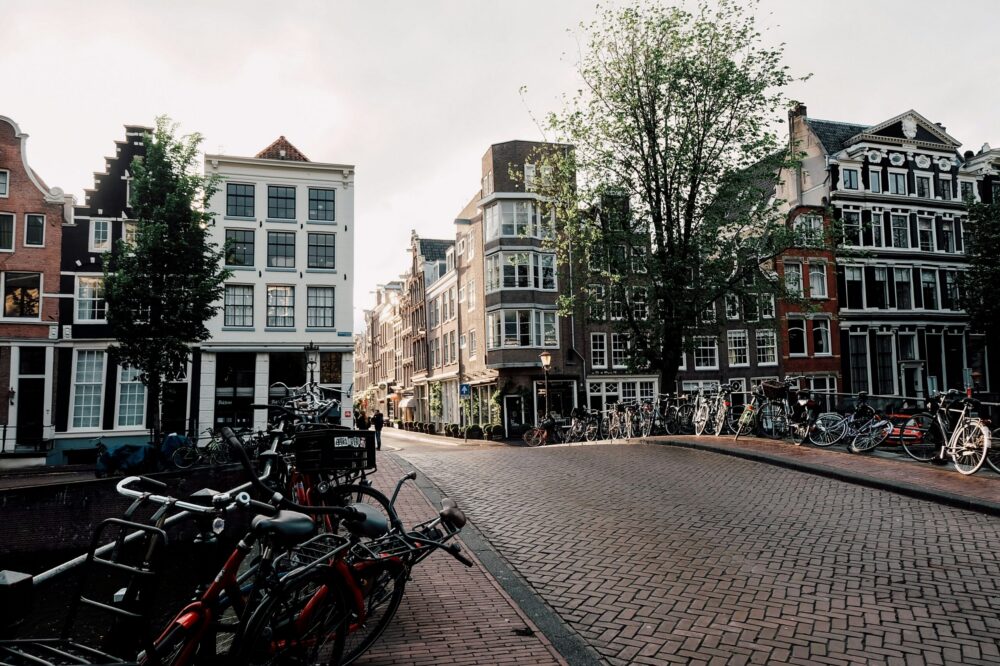
Photo by jennieramida on Unsplash
The article mentions that most PhD candidates are hired as employees. Does that mean if I get a fully funded position, I won’t need to apply for a separate scholarship?
Yes, that’s correct. For fully funded PhD positions (job vacancies), you apply directly for the job and are employed by the university with a salary and benefits. No separate scholarship application is needed – the funding is part of the position.