

Table des matières:
Overview of Strasbourg University’s Research Landscape
Strasbourg University (Université de Strasbourg) is one of France’s leading research-intensive universities, consistently ranked among the top 100 worldwide. It hosts over 80 research laboratories and units, many in partnership with the CNRS (French National Centre for Scientific Research), INSERM (National Institute of Health and Medical Research), and other major organizations. These labs span all disciplines: natural sciences, engineering, health, humanities, social sciences, and law. The university’s research strategy emphasizes interdisciplinary collaboration, with several federative institutes bridging traditional boundaries.
Major Research Laboratories in Sciences and Engineering
Physics and Chemistry
The Institut de Physique et Chimie des Matériaux de Strasbourg (IPCMS) is a joint CNRS-University unit focusing on materials science, from nanomaterials to complex systems. It houses around 200 researchers working on magnetism, optics, and soft matter. Another key lab is the Laboratoire de Chimie Moléculaire (LCM), which specializes in synthetic chemistry and catalysis. The Institut de Science et d’Ingénierie Supramoléculaires (ISIS) is world-renowned for supramolecular chemistry, led by Nobel laureate Jean-Pierre Sauvage.
Life and Health Sciences
The Institut de Génétique et de Biologie Moléculaire et Cellulaire (IGBMC) is one of Europe’s largest biomedical research centers, focusing on genomics, structural biology, and developmental biology. It is a joint unit with CNRS, INSERM, and the University. The Laboratoire de Neurosciences Cognitives et Adaptatives (LNCA) studies brain mechanisms underlying behavior and cognition. The Fédération de Médecine Translationnelle (FMTS) coordinates translational research across hospitals and labs, including the Institut de Recherche sur les Maladies Virales et Hépatiques and the Unité de Recherche sur le Cancer (URC).
Mathematics and Computer Science
The Institut de Recherche Mathématique Avancée (IRMA) covers pure and applied mathematics, with groups in algebra, geometry, analysis, and probability. In computer science, the Laboratoire des Sciences de l’Image, de l’Informatique et de la Télédétection (LSIIT) focuses on image processing and computer vision, while the Laboratoire d’Informatique Théorique et Appliquée (LITA) works on algorithms and artificial intelligence.
Key Research Laboratories in Humanities and Social Sciences
History, Literature, and Philosophy
The Laboratoire d’Histoire et de Philosophie des Sciences (LHPS) investigates the history of scientific ideas. The Centre de Recherche sur les Médiations (CREM) studies communication, literature, and digital media. The Equipe de Recherche en Linguistique et Sémiotique (ERLS) focuses on language theory and semiotics.
Law, Economics, and Management
The Centre de Recherche en Droit Privé (CRDP) and Centre de Recherche en Droit Public (CRDP) are major legal research units. The Bureau d’Économie Théorique et Appliquée (BETA) is a joint lab with CNRS and the University of Lorraine, specializing in industrial economics, innovation, and environmental economics. The Humanis lab in management studies organizational behavior and human resources.
Interdisciplinary Research Institutes and Federative Structures
Strasbourg University promotes cross-disciplinary work through several institutes. The Institut d’Études Avancées (USIAS) invites international researchers for collaborative projects. The Fédération de Recherche en Environnement et Développement Durable (FREDD) brings together labs working on ecology, climate, and sustainability. The Institut Thématique Interdisciplinaire (ITI) in Health, Environment, and Society connects life scientists with social scientists to tackle public health challenges.
How to Find and Collaborate with Strasbourg Research Labs
To explore the full list of labs, visit the university’s official research portal. Each lab has a dedicated webpage with contact information, ongoing projects, and publications. For collaboration, consider the following steps:
- Identify labs aligned with your research interests using the CNRS directory or the university’s Laboratories map.
- Contact the lab director or a researcher via email, briefly introducing yourself and your project.
- Check if the lab offers visiting researcher programs or joint supervision for PhD students.
- Explore funding opportunities such as Erasmus+, Marie Curie Actions, or the French Embassy’s grants.
- Attend the university’s annual Research Day or thematic workshops to network.
Practical Checklist for Prospective Researchers
- Define your research field and match it with Strasbourg’s lab specialties.
- Review recent publications from the lab to understand their current focus.
- Prepare a concise research proposal outlining your objectives and how they align with the lab’s work.
- Check language requirements: while many labs operate in English, some may require French for administrative tasks.
- Secure funding before applying; most labs welcome self-funded researchers.
- Apply for a visa if you are a non-EU researcher; the university’s international office can assist.
Frequently Asked Questions
How many research labs does Strasbourg University have?
Strasbourg University hosts over 80 research units, including CNRS and INSERM joint labs.
What are the largest research labs at Strasbourg University?
The largest include IGBMC (life sciences), IPCMS (materials), and BETA (economics).
Can international researchers join Strasbourg labs?
Yes, the university actively welcomes international researchers through programs like USIAS and Erasmus+.
Are there English-language research environments?
Many labs, especially in sciences, use English as the working language, but proficiency in French is helpful for daily life.
How do I apply for a PhD position in a Strasbourg lab?
Check the lab’s website for open positions, or contact potential supervisors directly. Funding is often available through doctoral schools.
What is the CNRS’s role in Strasbourg’s labs?
CNRS co-funds and co-manages many labs, providing researchers, equipment, and administrative support.
Next Steps: Making the Most of Strasbourg’s Research Ecosystem
Strasbourg University’s research labs offer a vibrant environment for cutting-edge discovery. Whether you are a student seeking a PhD, a postdoc looking for a new challenge, or a senior researcher aiming to collaborate, the key is to start early, prepare thoroughly, and leverage the university’s interdisciplinary networks. Use the official research directory to shortlist labs, reach out with a clear proposal, and explore funding options. The city’s central location in Europe and its rich cultural heritage further enhance the experience. Good luck with your research journey!
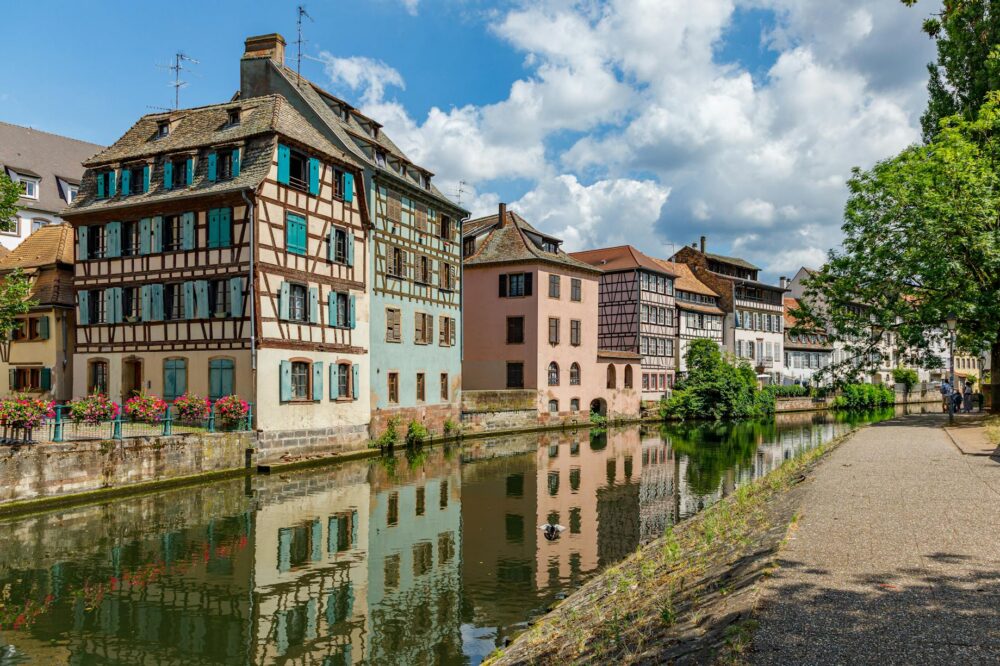
Photo by Filiz Elaerts on Unsplash



This guide is helpful, but I was wondering about labs in environmental science. Are there any at Strasbourg University?
Yes, there are several. The Laboratoire Image, Ville, Environnement (LIVE) focuses on urban ecology and environmental geography. Also, the Institut de Chimie et Procédés pour l’Environnement, l’Énergie et la Santé (ICPEES) works on green chemistry and water treatment. You might also check the Fédération de Recherche en Environnement (FRE).
Thanks for the detailed list! How do I apply for a PhD position in one of these labs? Is it through the university or directly with the lab?
You can apply either way. Most PhD positions are advertised on the university’s doctoral school website (ED 413 for sciences, ED 520 for humanities). However, it’s also common to contact a lab director directly with a research proposal. Funding can come from the lab, the university, or external grants like the French government’s CDSN.
I noticed you mentioned the Institut de Science et d’Ingénierie Supramoléculaires (ISIS) and Nobel laureate Jean-Pierre Sauvage. Is he still active there?
Yes, Jean-Pierre Sauvage is still affiliated with ISIS as an emeritus professor. He occasionally gives lectures and participates in research. The lab continues his legacy in supramolecular chemistry.
Are all these labs open to undergraduate research assistants, or are they mostly for graduate students?
Many labs welcome undergraduate research assistants, especially during summer internships. Programs like the ‘Stage de Licence’ or ‘Initiation à la Recherche’ are common. It’s best to contact lab directors directly for opportunities.
Great article! I’m applying for a master’s in materials science. Which lab would you recommend for someone interested in nanomaterials?
The Institut de Physique et Chimie des Matériaux de Strasbourg (IPCMS) is the top choice for nanomaterials. They have strong groups in nanomagnetism, nanophotonics, and soft matter. Many master’s projects are available there.
I’m a history student and was surprised to see so many humanities labs mentioned. Could you tell me more about the Centre de Recherche sur les Médiations (CREM)?
Certainly! CREM is a multidisciplinary research center focusing on mediations in communication, literature, and digital media. It brings together linguists, literature scholars, and media experts. They have projects on digital humanities, cultural mediation, and discourse analysis. The lab is located on the Campus de la Faculté des Lettres.
This is a very thorough overview. I’m particularly interested in the IGBMC. Do they have any programs for international postdocs?
Yes, the IGBMC actively recruits international postdocs. You can find open positions on their website under ‘Jobs’ or through the University’s EURAXESS portal. They also offer fellowships like the IGBMC International PhD Programme.