
Table des matières:
Why You Need a French Language Test for Nice Universities
If you’re planning to study at a university in Nice—such as Université Côte d’Azur, SKEMA Business School, or EDHEC—you’ll almost certainly need to prove your French proficiency. Most programs require official certifications like DELF, DALF, TCF, or TEF. This guide walks you through exactly how to prepare for the French language test for Nice universities, covering test formats, study strategies, and practical tips to help you succeed.
Which French Language Tests Are Accepted in Nice?
Nice universities typically accept several standardized tests. The most common are:
- DELF (Diplôme d’Études en Langue Française) – for levels A1 to B2
- DALF (Diplôme Approfondi de Langue Française) – for levels C1 and C2
- TCF (Test de Connaissance du Français) – a proficiency test often used for university admissions
- TEF (Test d’Évaluation de Français) – accepted by many institutions
Check your specific program’s requirements: some demand a B2 level, while others may accept B1 for certain courses. Always verify on the university’s official website.
Understanding the Test Format
DELF/DALF Structure
DELF and DALF are divided into four sections: listening, reading, writing, and speaking. Each section is scored out of 25, and you need at least 5/25 in each to pass. The total duration ranges from 1 hour 20 minutes (A1) to 4 hours (C2).
TCF Structure
The TCF has mandatory multiple-choice sections (listening, language structures, reading) and optional writing and speaking. Scores are given on a scale from A1 to C2. The test lasts about 2 hours 25 minutes for the compulsory part.
TEF Structure
TEF includes four sections: reading, listening, writing, and speaking. It’s scored similarly to TCF. Duration is about 2 hours 50 minutes.
How to Prepare Effectively
1. Assess Your Current Level
Before diving into preparation, take a placement test online (e.g., TV5MONDE or CIEP) to know your starting point. This helps you set realistic goals and choose the right exam level.
2. Create a Study Plan
Allocate at least 2-3 months if you’re aiming for B2. Here’s a sample weekly schedule:
- Monday: Listening practice (30 min) + vocabulary review (20 min)
- Tuesday: Reading comprehension (40 min) + grammar exercises (20 min)
- Wednesday: Writing practice (40 min) + speaking with a partner (20 min)
- Thursday: Listening (30 min) + vocabulary (20 min)
- Friday: Full mock test (timed) + review mistakes
- Weekend: Immersion activities: watch French films, read news, or attend language meetups.
3. Use Official Preparation Materials
Invest in official DELF/DALF or TCF preparation books (e.g., “Réussir le DELF” series) and take sample tests. Many are available online for free.
4. Focus on Weak Areas
Identify your weakest skill early. If speaking is difficult, practice daily with language exchange apps like Tandem or HelloTalk. For writing, keep a journal in French and ask a tutor to correct it.
5. Immerse Yourself in French
Nice is a French-speaking city, but you can start immersion at home:
- Listen to French radio (France Info, RFI)
- Watch TV shows with French subtitles (e.g., “Dix pour cent” on Netflix)
- Read local news from Nice-Matin
Common Mistakes to Avoid
- Ignoring the speaking section: Many students focus only on reading and listening. Practice speaking aloud regularly.
- Neglecting time management: Mock tests under timed conditions are crucial. Learn to pace yourself.
- Overlooking cultural context: DELF/DALF often include cultural references. Familiarize yourself with French society.
- Waiting until the last minute: Cramming doesn’t work for language proficiency. Consistent daily practice is key.
Practical Tips for Test Day
- Bring valid ID and your registration confirmation.
- Arrive at least 30 minutes early to the test center.
- For the speaking test, be ready to introduce yourself and discuss a topic. Prepare a few minutes of spontaneous speech.
- During listening, read the questions first to know what to listen for.
- Stay calm and manage your time: don’t spend too long on one question.
Comparison of Test Options
| Test | Levels | Duration | Cost (approx.) | Validity |
|---|---|---|---|---|
| DELF | A1-B2 | 1h20-2h30 | €100-€150 | Lifetime |
| DALF | C1-C2 | 4h | €150-€200 | Lifetime |
| TCF | A1-C2 | 2h25 | €100-€150 | 2 years |
| TEF | A1-C2 | 2h50 | €120-€180 | 2 years |
Note: Costs vary by test center. Check with your local Alliance Française or official test center in Nice.
Resources for Self-Study
- TV5MONDE Langue Française – free exercises and tests
- Le Point du FLE – grammar and vocabulary activities
- RFI Savoirs – listening exercises with transcripts
- Apprendre le Français avec TV5MONDE – videos and quizzes
Final Advice: Your Action Plan
To successfully prepare for the French language test for Nice universities, start early, use official materials, and practice consistently. Simulate test conditions with mock exams, and don’t hesitate to seek help from a tutor or language class. Remember that the test is just one step—your goal is to gain enough proficiency to thrive in an academic environment in Nice. Good luck!
Frequently Asked Questions
Which French test is easiest for university admission in Nice?
There is no “easiest” test; each has similar difficulty. Choose based on your strengths: DELF/DALF have a structured format, while TCF/TEF are multiple-choice. Check university requirements first.
Can I take the French test in Nice?
Yes, Nice has official test centers, including Alliance Française de Nice and CIEP-affiliated centers. Book early as slots fill quickly.
What level do I need for a bachelor’s program?
Most bachelor’s programs require B2, but some science or English-taught programs may accept B1. Verify with your specific university.
How long does it take to prepare for the B2 level?
If you’re at A2, expect 6-9 months of consistent study. For B1 to B2, 3-4 months may suffice with intensive practice.
What happens if I fail the test?
You can retake the test as many times as you want. Focus on weak areas before reattempting. Some universities offer conditional admission with a language course.
Are there any free preparation courses?
Yes, platforms like France Université Numérique (FUN) offer free MOOCs. Local libraries may also have resources. Additionally, Alliance Française sometimes offers free workshops.
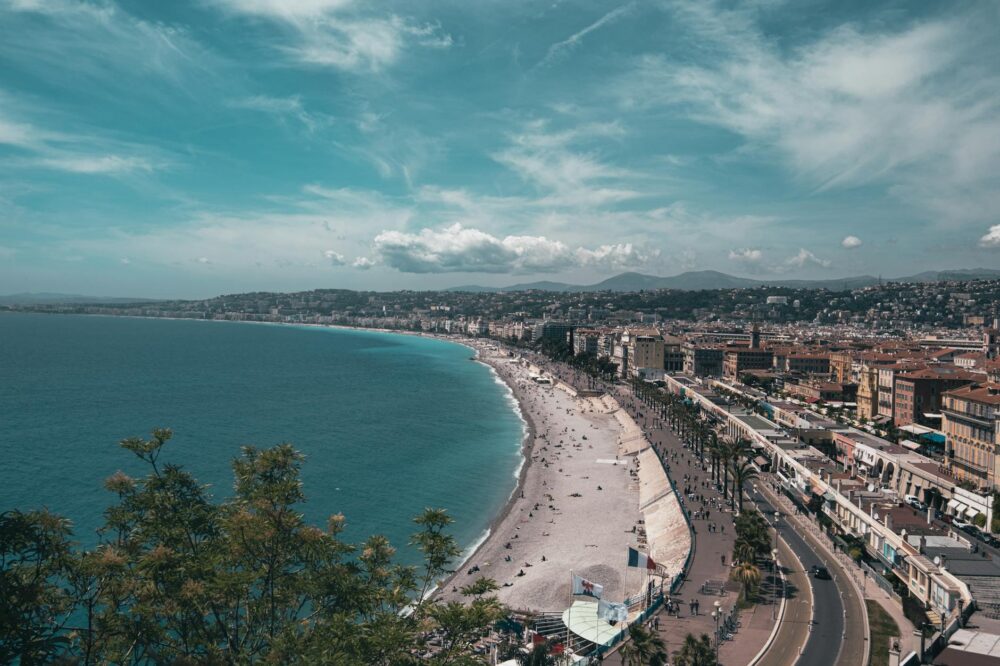
Photo by Lucas Mota on Pexels


Thanks for the sample weekly schedule! Do you recommend any specific official preparation books for the TCF?
Yes, ‘TCF 250 activités’ and ‘Réussir le TCF’ are excellent resources. They include practice tests and explanations. Also, check the France Éducation International website for sample papers.
Great article! One thing I’m wondering: for the speaking section of DELF, do you have any tips on how to practice if I don’t have a French-speaking partner nearby?
You can use language exchange apps like Tandem or HelloTalk to find partners. Also, record yourself answering common prompts and listen back to improve. Some online tutors offer affordable conversation practice.
I’m planning to apply to Université Côte d’Azur for a master’s program in business. The website says they require B2 level French. Which test do you recommend I take, DELF or TCF?
Both DELF and TCF are widely accepted. If you prefer a diploma that never expires, go for DELF B2. TCF is often faster to schedule and results come quicker. Check the specific program requirements to be sure.
I’ve been studying French for a year and I’m at A2 level. How long do you think it would take to reach B2 if I study 10 hours a week?
Reaching B2 from A2 typically takes 300-400 hours of study. At 10 hours per week, that’s around 7-10 months. Focus on consistent practice and use official prep materials to track progress.