Table des matières:
Introduction
Amsterdam is a compact and bike-friendly city, but its public transport network is equally efficient and essential for reaching areas beyond the canal ring or during inclement weather. Understanding how to use public transport in Amsterdam can save you time, money, and confusion. This comprehensive guide covers everything from trams to ferries, ticket options, and insider tips to help you navigate the city like a local.
Overview of Amsterdam’s Public Transport System
Amsterdam’s public transport is operated by GVB (Gemeente Vervoerbedrijf) and includes trams, buses, metros, and ferries. The network integrates seamlessly with regional trains operated by NS (Nederlandse Spoorwegen). Key features include contactless payment, a unified ticketing system, and frequent service throughout the day.
Types of Public Transport
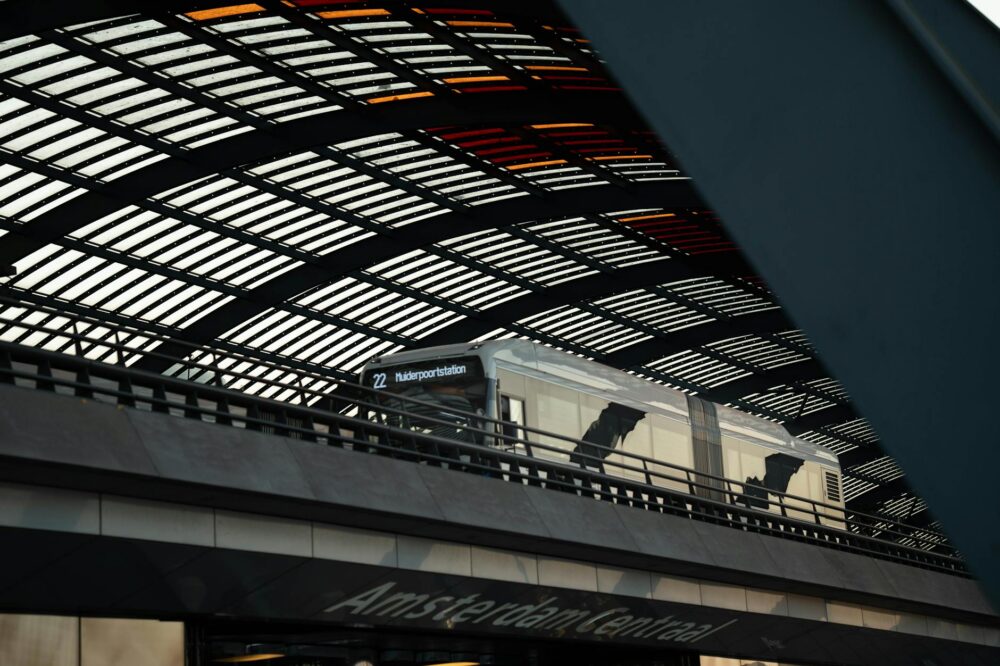
- Trams: The most iconic and extensive mode, covering central areas and suburbs. Lines 1, 2, 5, 13, and 17 are popular with tourists.
- Metro: Faster, underground lines connecting the city center to outlying districts like Bijlmer ArenA and Amsterdam Zuid. Lines 50, 51, 52, 53, and 54.
- Buses: Fill gaps left by trams and metros, especially in less central neighborhoods and to/from Schiphol Airport (bus 397).
- Ferries: Free, 24/7 service across the IJ river, connecting Amsterdam Centraal to Noord. No ticket needed.
Tickets and Payment Methods
To use public transport in Amsterdam, you need a valid ticket. The most convenient options are the OV-chipkaart or contactless payment with a debit/credit card or smartphone.
OV-chipkaart
The OV-chipkaart is a rechargeable smart card used on all GVB, NS, and other Dutch public transport. There are two types:
- Anonymous OV-chipkaart: Buy at ticket machines, GVB service points, or supermarkets (€7.50 card cost). Load credit or a travel product (e.g., 1-hour ticket, day pass).
- Personal OV-chipkaart: Requires registration, not recommended for short visits.
Contactless Payment (OVpay)
Since 2023, you can tap in and out with a contactless debit/credit card (Visa, Mastercard, Maestro) or smartphone (Apple Pay, Google Pay). The system automatically calculates the fare based on distance. Each person needs their own card. This is the easiest way for tourists.
Single-Use Tickets
Paper tickets (e.g., GVB 1-hour ticket, day pass) are available at ticket machines and some shops. They are more expensive per ride than OV-chipkaart or contactless, but convenient for short stays.
Travel Products
- GVB Day Pass: Unlimited travel on GVB trams, buses, and metros for 1-7 days. Prices start at €9.00 for 24 hours (2024).
- Amsterdam Travel Ticket: Includes GVB, NS trains to/from Schiphol, and airport bus. From €18.00 for 1 day.
- I amsterdam City Card: Includes GVB transport, museum entry, and canal cruise. From €65.00 for 24 hours.
How to Use Trams, Buses, and Metros
Regardless of the vehicle, the process is similar: check the route, board, validate your ticket, and exit at your stop.
Boarding and Validating
- OV-chipkaart or contactless: Hold your card or phone against the card reader (check-in) when boarding. For trams and buses, readers are at the doors. For metros, at station entrances. Check-out when alighting (for trams/buses: at the back doors; for metros: at station exits).
- Paper ticket: Show to the driver or scan at the reader (if QR code). Day passes may need to be shown.
Finding Your Stop
Stops are clearly marked with line numbers, route maps, and real-time departure screens. Use apps like 9292, Google Maps, or GVB’s own app for live updates.
Etiquette
- Let passengers exit before boarding.
- Offer seats to elderly, disabled, or pregnant passengers.
- Keep luggage out of aisles.
- No eating or drinking on trams/buses.
Using Ferries
Amsterdam’s free ferries connect Centraal Station to Amsterdam Noord. No ticket is needed. Just walk on. The main routes are Buiksloterweg (to NDSM wharf), IJplein, and Distelweg. Ferries run 24/7, but frequency drops late at night.
Tips for Navigating Amsterdam by Public Transport
- Buy a day pass if you plan to take more than 3-4 rides in one day.
- Use contactless for short visits to avoid buying an OV-chipkaart.
- Check for disruptions on the GVB website or app, especially on weekends.
- Avoid peak hours (8:30-9:30 AM, 5:00-6:30 PM) if possible.
- Bikes are allowed on metros and ferries (off-peak) but not on trams/buses.
- Night buses run after midnight on major routes (N lines).
How to Get from Schiphol Airport to Amsterdam City Center
The easiest way is by train (NS) to Amsterdam Centraal (15-20 minutes, €5.60). Alternatively, bus 397 (Nobelweg) takes about 30 minutes and stops near Museumplein. GVB trams and metros connect from Centraal to other parts of the city.
Common Mistakes to Avoid
- Forgetting to check out (tap out) – you’ll be charged the maximum fare.
- Using the wrong ticket type (e.g., GVB ticket on NS train).
- Not validating a paper ticket – drivers may not remind you.
- Assuming all trams go to Centraal – check the line number.
Conclusion
Learning how to use public transport in Amsterdam is straightforward once you understand the ticketing system and basic etiquette. Whether you choose the OV-chipkaart, contactless payment, or day passes, the network is reliable and covers the entire city. With this guide, you’ll be able to travel confidently from the historic center to hidden gems like NDSM or the Amsterdamse Bos. Enjoy your trip and travel smart!
Photo by Viridiana Rivera on Pexels