Table des matières:
Introduction
Rome, the Eternal City, is a treasure trove of ancient history. While many of its iconic attractions require tickets, there are numerous free archaeological sites in Rome in 2026 that offer a deep dive into the past without costing a cent. Whether you’re a history buff or a budget traveler, this guide will help you explore Rome’s ancient wonders for free. From the sprawling Roman Forum to the serene Appian Way, you’ll discover that some of the best experiences in Rome are absolutely free.
Why Visit Free Archaeological Sites in Rome in 2026?
Rome’s archaeological heritage is unparalleled. While paid sites like the Colosseum and Palatine Hill are must-sees, the city also offers free access to many historically significant areas. In 2026, several sites remain open to the public at no charge, allowing visitors to experience the grandeur of ancient Rome without breaking the bank. These free archaeological sites in Rome in 2026 provide an authentic glimpse into the daily life, politics, and culture of the Roman Empire.
Top Free Archaeological Sites in Rome in 2026
The Roman Forum (Free Areas)
While the main archaeological area of the Roman Forum requires a ticket, you can still enjoy free views from the surrounding streets. The Via dei Fori Imperiali offers a panoramic walkway overlooking the Forum, the Imperial Fora, and the Colosseum. In 2026, this area remains free and is perfect for photos and self-guided tours. Additionally, the Fori Imperiali (Imperial Forums) are partially visible from the street, with information panels explaining their history.
Palatine Hill (Free Viewpoints)
Although entering Palatine Hill requires a combined ticket with the Colosseum, you can appreciate its grandeur from free viewpoints. The Terrazza del Pincio and the Giardino degli Aranci (Orange Garden) offer stunning vistas of the Palatine and the Roman Forum. These spots are free and open to the public, providing a taste of ancient Rome’s elevated status.
The Appian Way (Via Appia Antica)
The Appian Way, one of the earliest and most important Roman roads, is largely free to explore. In 2026, the Parco Regionale dell’Appia Antica offers free access to the ancient road, lined with tombs, catacombs, and ruins. You can walk or bike along the original basalt stones, visiting sites like the Catacombs of San Callisto and San Sebastiano (though some catacombs charge for guided tours). The park also hosts free archaeological areas such as the Villa dei Quintili (free on certain days) and the Circus of Maxentius.
Baths of Caracalla (Free External Views)
The Baths of Caracalla are a majestic complex of public baths from the 3rd century AD. While entering the site requires a ticket, you can admire the massive ruins from the free public park surrounding them. In 2026, the external areas are open to all, offering a sense of the scale and engineering prowess of ancient Rome.
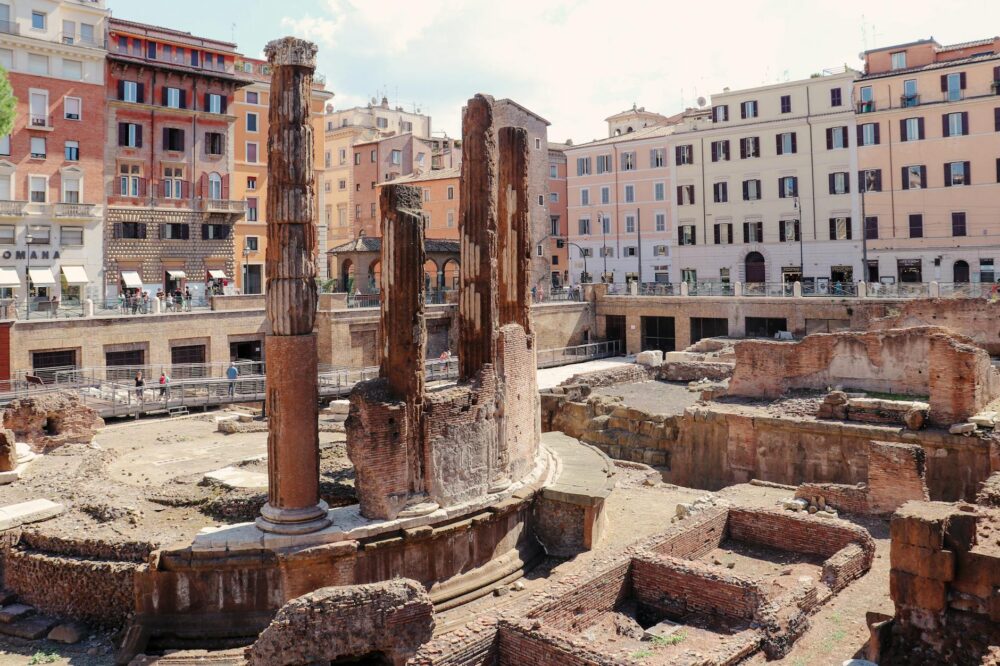
Largo di Torre Argentina
This archaeological site in the heart of Rome contains the remains of four Republican-era temples and the Curia of Pompey, where Julius Caesar was assassinated. In 2026, you can view the ruins from street level for free. The area is also a cat sanctuary, adding a unique charm. While you cannot descend into the excavation, the elevated walkway provides excellent views and informative plaques.
Trajan’s Market (Free Access to Lower Levels)
Trajan’s Market, often considered the world’s first shopping mall, is partially free to visit. The lower levels, including the Grande Emiciclo, are visible from the street without a ticket. In 2026, you can walk along the Via dei Fori Imperiali and see the semicircular structure that housed shops and administrative offices. The Mercati di Traiano museum requires a ticket, but the external views are free.
The Pantheon (Free Entry Continues)
As of 2026, the Pantheon remains free to enter, though this may change. This best-preserved ancient Roman building is a marvel of engineering and art. The oculus and the coffered dome are breathtaking, and the interior houses the tombs of Raphael and other Italian kings. Always check current regulations before visiting, as free entry policies can evolve.
Castel Sant’Angelo (Free External Areas)
While the interior of Castel Sant’Angelo requires a ticket, the surrounding Parco Adriano and the bridge Ponte Sant’Angelo are free. You can admire the castle’s massive cylindrical form from the outside and enjoy the statues on the bridge, which were designed by Bernini. The park is a pleasant spot for a rest after exploring nearby Vatican City.
Free Walking Tours and Self-Guided Itineraries
In addition to individual sites, you can join free walking tours that cover multiple free archaeological sites in Rome in 2026. Many companies offer “pay-what-you-wish” tours, which are excellent for budget travelers. Alternatively, create your own self-guided itinerary using the free sites listed above. A suggested route:
- Start at the Pantheon (free entry).
- Walk to Largo di Torre Argentina (free view).
- Stroll along Via dei Fori Imperiali for views of the Roman Forum and Imperial Fora.
- Continue to Trajan’s Market (free external views).
- End at the Baths of Caracalla (free external park).
Tips for Visiting Free Archaeological Sites in Rome in 2026
- Check opening hours: While the sites are free, some have restricted access times. Always verify on official websites.
- Wear comfortable shoes: Rome’s ancient streets can be uneven, especially on the Appian Way.
- Bring water: Especially in summer, as many free sites have limited shade.
- Use public transport: Many free sites are accessible by bus or metro. The Appian Way is best reached by bus from the city center.
- Combine with other free attractions: Rome also offers free churches, piazzas, and fountains, such as the Trevi Fountain and Piazza Navona.
Conclusion
Rome in 2026 offers an abundance of free archaeological sites that allow you to step back in time without spending a dime. From the iconic Pantheon to the ancient Appian Way, these sites provide a rich historical experience that rivals paid attractions. By exploring these free archaeological sites in Rome in 2026, you can immerse yourself in the glory of the Roman Empire while keeping your budget intact. Plan your itinerary, grab a map, and get ready to discover the Eternal City’s ancient treasures for free.
Photo by Claudia Solano on Pexels