
Table des matières:
Introduction
The British Museum in London is one of the world’s greatest cultural institutions, housing millions of artifacts spanning human history. With over 6 million visitors annually, it can get extremely crowded. Knowing the best time to visit the British Museum can make your experience more enjoyable, allowing you to appreciate the exhibits without the stress of large crowds. This guide explores the optimal times to visit, including days of the week, seasons, and time slots, along with practical tips for a smooth visit.
Why Timing Matters at the British Museum
The British Museum is free to enter, which naturally attracts huge numbers of tourists and locals alike. Peak times can mean long queues, packed galleries, and difficulty viewing famous artifacts like the Rosetta Stone or the Parthenon sculptures. Visiting at the right time ensures a more relaxed atmosphere, better photo opportunities, and a chance to engage with the exhibits more intimately.
Best Days of the Week to Visit
Weekdays are generally much quieter than weekends. Here’s a breakdown:
- Tuesday, Wednesday, and Thursday: These are typically the least crowded days. Tuesday is often the quietest, as many people travel on weekends or extend their trips through Monday.
- Monday: Can be busy in the morning but thins out by afternoon. Some schools and groups visit on Mondays.
- Friday: Moderate crowds, but the museum stays open until 8:30 PM on Fridays (some galleries close earlier), offering a quieter evening visit.
- Weekends (Saturday and Sunday): These are the busiest days, especially between 10 AM and 2 PM. If you must visit on a weekend, aim for early morning or late afternoon.
Best Time of Day
Early Morning (Opening Time)
The museum opens at 10 AM daily. Arriving 15–20 minutes before opening allows you to be among the first inside. Head straight to the most popular galleries (Egyptian sculpture, Rosetta Stone) before the crowds build.
Late Afternoon (After 3 PM)
Another quiet window is late afternoon, especially on weekdays. Many tour groups leave by mid-afternoon, and school trips wrap up. You’ll find fewer people in the Great Court and galleries.
Evenings on Friday
On Fridays, the museum remains open until 8:30 PM. The last hour (7:30–8:30 PM) is often very quiet. Note that some galleries close earlier, so check the museum’s website for details.
Best Seasons to Visit
London’s tourist seasons affect crowd levels at the British Museum:
- Low Season (November–February, excluding holidays): This is the best time for a quiet visit. January and February are particularly empty, except for school breaks. The weather is cold and wet, deterring many tourists.
- Shoulder Season (March–May, September–October): Moderate crowds. Spring and autumn offer pleasant weather, but you’ll encounter more visitors. Weekdays are still manageable.
- Peak Season (June–August, plus school holidays): The busiest time. The museum is packed, especially July and August. If you visit during peak season, stick to weekday early mornings or Friday evenings.
Special Events and Holidays
Avoid visiting during UK school holidays (Easter, summer break, Christmas/New Year) unless you book a timed entry. The museum can be extremely crowded. Also, check for special exhibition openings, which attract large crowds. Conversely, the museum is quieter on days when major events (like the London Marathon) are happening, as many tourists are elsewhere.
Tips for a Stress-Free Visit
- Book free timed entry tickets in advance: Even though entry is free, the museum now requires timed tickets for all visitors (as of 2025). Booking ahead ensures you don’t queue for entry.
- Use the side entrance: The main entrance on Great Russell Street can have long queues. The side entrance on Montague Place is often quieter.
- Visit lesser-known galleries: The museum has vast collections. While the Egyptian and Greek galleries are popular, the Enlightenment Gallery, Africa galleries, and the Clocks and Watches collection are often less crowded.
- Take advantage of free guided tours: The museum offers free daily tours (check schedule). These can help you navigate efficiently.
- Plan your route: Decide which must-see artifacts you want to see and plan a route to avoid backtracking through crowds.
Conclusion
The best time to visit the British Museum is on a weekday morning (Tuesday–Thursday, arriving at 10 AM) or a Friday evening (after 6 PM). Low season months like January and February offer the quietest experience. By planning your visit with these time slots in mind, you’ll avoid the worst crowds and enjoy a more intimate encounter with one of the world’s greatest museums. Remember to book your free timed entry ticket in advance and arrive early to maximize your time. Whether you’re a history buff or a casual visitor, the British Museum is a must-see, and with the right timing, you can make the most of your visit.
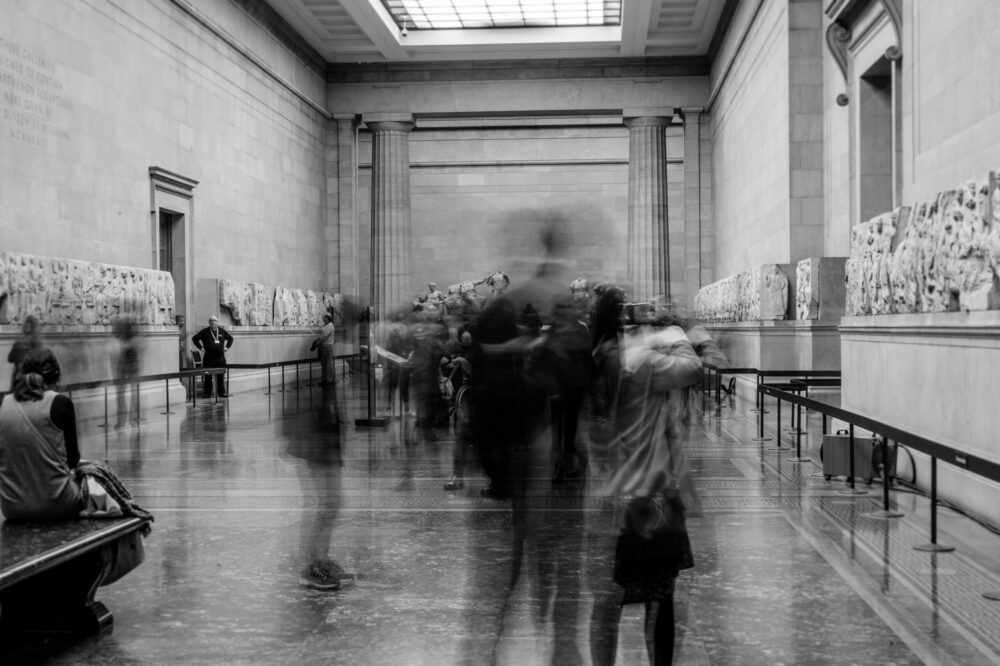
Photo by Sam Barber on Unsplash


I’m planning a trip in late March. Should I expect moderate crowds on a Tuesday morning?
Yes, late March falls in shoulder season, so Tuesday mornings are still a good choice. Arrive by 9:45 AM to be among the first inside and head straight to popular galleries.
Is the side entrance on Montague Place really less crowded? I’ve never heard of it.
Yes, the Montague Place entrance is often much quieter, especially on busy days. It’s located near the back of the museum and can save you time in queues.
Do I need to book timed tickets even in low season like January?
Yes, as of 2025, timed tickets are required year-round. Booking ahead is free and ensures you can enter without queuing, even during quiet periods.
I’d love to see the Rosetta Stone without huge crowds. What’s the best strategy?
Visit on a Tuesday or Thursday morning as soon as the museum opens. Head directly to the Egyptian sculpture gallery. Alternatively, go on a Friday evening after 7 PM.