
Table des matières:
Why the University of Strasbourg Stands Out Among French Universities
Choosing a university in France involves understanding subtle but significant variations in academic culture, research intensity, and international outlook. The University of Strasbourg (Unistra) distinguishes itself through its unique history, interdisciplinary structure, and deep ties with Germany and Europe. This article explores the concrete differences between Unistra and other French universities, helping you decide if it fits your academic and career goals.
Historical and Structural Uniqueness
The University of Strasbourg was founded in 1538 and has a long tradition of humanism and scientific innovation. In 2009, it merged three separate universities (Louis Pasteur, Marc Bloch, and Robert Schuman) into a single multidisciplinary institution. This merger created one of the largest and most comprehensive universities in France, with over 50,000 students and 5,000 researchers.
Most other French universities remain either generalist or specialized, but Unistra’s integrated model allows seamless collaboration across fields like medicine, law, humanities, and engineering. For example, a student can combine a law degree with courses in European studies or digital humanities without administrative barriers.
Comparison with Other French Universities
| Feature | University of Strasbourg | Other French Universities |
|---|---|---|
| Structure | Single merged university with 35+ component schools and institutes | Often fragmented into separate universities (e.g., Paris 1, Paris 2) or specialized schools |
| International focus | Strong Franco-German and European orientation; 20% international students | Varies; some have high international presence (e.g., Sorbonne), others are more locally focused |
| Research intensity | Among top French research universities; 2 Nobel laureates affiliated | Research varies; some are teaching-focused, others research-intensive (e.g., PSL, Saclay) |
| Interdisciplinarity | Encouraged through structured programs like IDEX (Initiative of Excellence) | Often limited by faculty boundaries; interdisciplinary programs less common |
Academic Programs and Degrees
Unistra offers a wide range of programs, but its strength lies in interdisciplinary and international degrees. For instance, the European Master in Law and Economics is a joint program with universities in Germany and Switzerland. Many programs include mandatory semesters abroad or double degrees with partner institutions.
Other French universities, such as Université Paris-Saclay or Université Grenoble Alpes, also offer international programs, but Unistra’s proximity to Germany and its role in the European campus (EUCOR) give it a unique cross-border character. Students can take courses at the University of Freiburg or the Karlsruhe Institute of Technology without leaving the region.
Checklist: What to Look For in a French University
- International partnerships: Does the university have double-degree programs with your target country?
- Research opportunities: Are there labs or institutes in your field of interest?
- Language of instruction: Are programs available in English at undergraduate level? (Unistra offers several English-taught master’s programs)
- Location: Do you prefer a large city like Paris or a smaller, more affordable city like Strasbourg?
- Interdisciplinary flexibility: Can you combine subjects across faculties?
Research Excellence and Innovation
The University of Strasbourg is classified as a “research-intensive” university and is part of the French “Initiative of Excellence” (IDEX), which provides substantial funding for cutting-edge research. It hosts 2 Nobel laureates (Jean-Pierre Sauvage in chemistry and Jules Hoffmann in medicine) and operates several joint research units with the CNRS and INSERM.
In contrast, many other French universities are primarily teaching-oriented, especially those outside the major research clusters. For example, universities in smaller cities may have limited research infrastructure. If you aspire to a research career, Unistra offers a vibrant ecosystem with state-of-the-art facilities in fields like chemistry, neuroscience, and European studies.
International Environment and Student Life
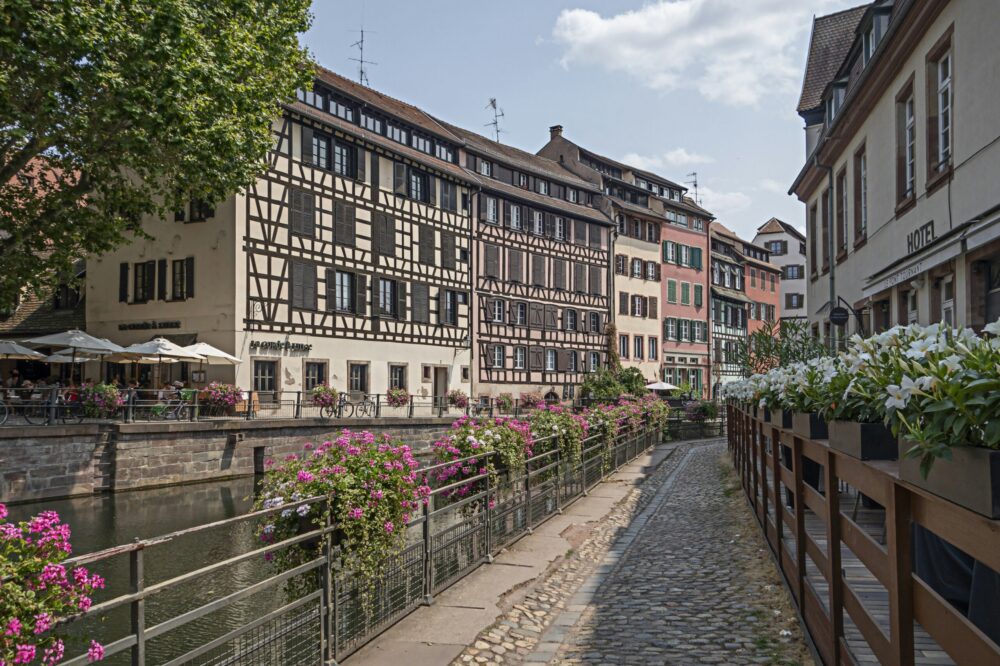
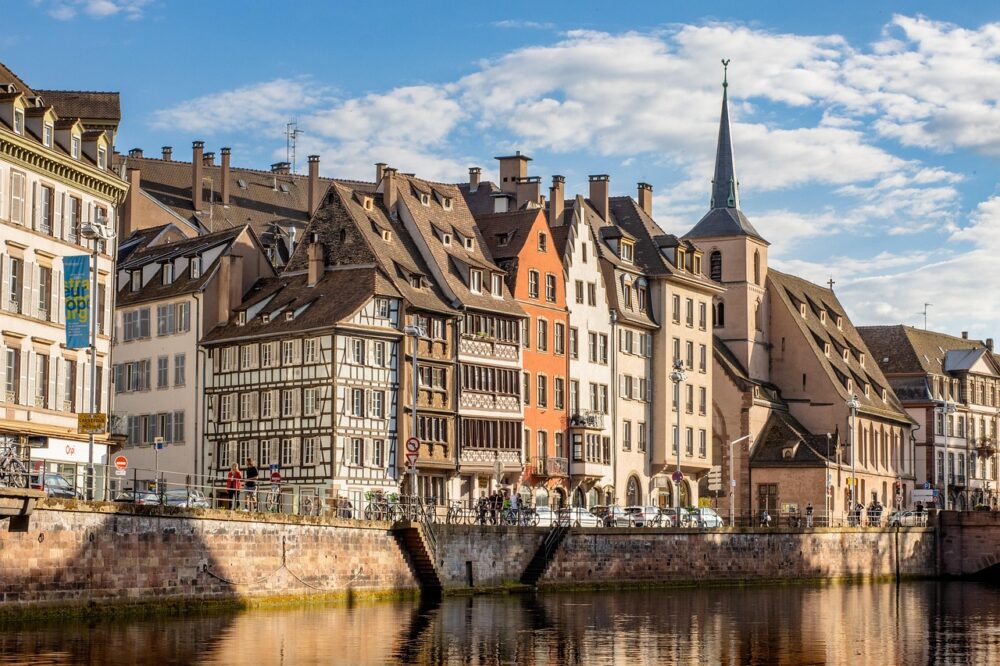
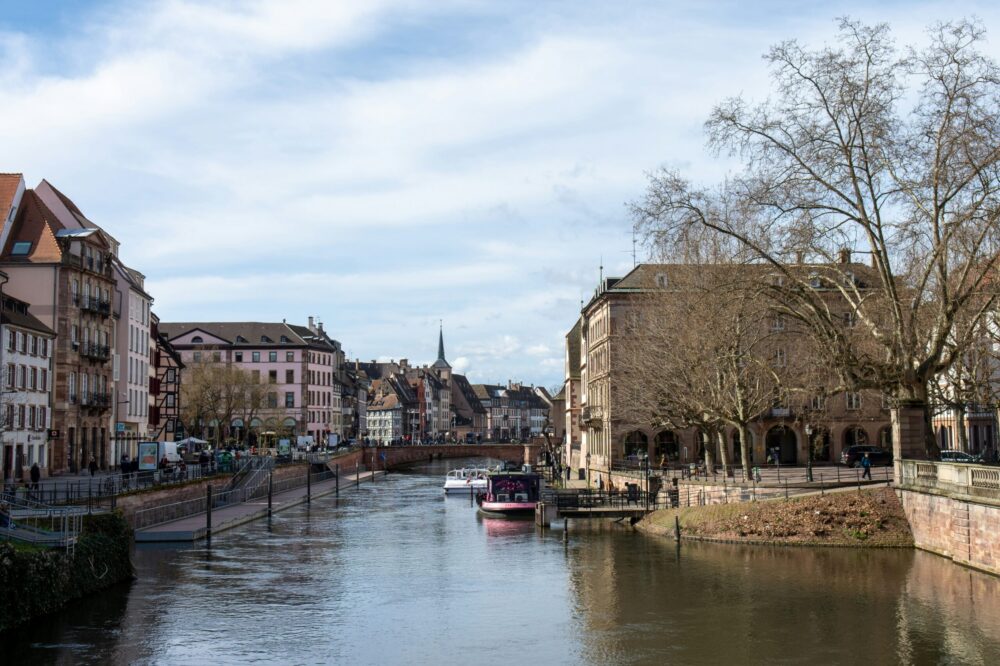
Strasbourg is home to the European Parliament, the Council of Europe, and the European Court of Human Rights, giving the university a distinct international atmosphere. Around 20% of Unistra’s students are international, and many programs are taught in English, especially at the master’s level. The city itself is a UNESCO World Heritage site with a high quality of life, affordable cost of living compared to Paris, and excellent train connections to major European capitals.
Other French universities in cities like Lyon, Bordeaux, or Toulouse also attract international students, but Strasbourg’s unique position as a European capital makes it particularly appealing for those interested in EU affairs, international law, or cross-cultural studies. The university also offers language courses and integration programs for newcomers.
Costs and Scholarships
Tuition fees at French public universities are regulated by the state. For EU/EEA students, fees are around €170–€243 per year for bachelor’s and €243–€380 for master’s, regardless of the university. However, non-EU students face higher fees: at Unistra, non-EU bachelor’s students pay €2,770 per year, and master’s students €3,770 (as of 2023). Some other universities, especially in Paris, may have additional administrative fees or higher living costs.



Unistra offers several scholarships, such as the “Excellence-Major” program for outstanding international students, and the “Eiffel” scholarship for master’s and PhD candidates. The city of Strasbourg also provides housing assistance. When comparing costs, consider that living in Strasbourg is about 20% cheaper than in Paris, with average rent around €400–€600 per month for a studio.
Common Misconceptions and Mistakes to Avoid
- Mistake 1: Assuming all French universities are the same. Unistra’s interdisciplinary structure and European focus set it apart.
- Mistake 2: Overlooking language requirements. While some programs are in English, many undergraduate courses require B2 French. Check program pages carefully.
- Mistake 3: Ignoring the campus location. Unistra has multiple campuses spread across Strasbourg; some are in the city center, others in the suburbs. Consider your daily commute.
- Mistake 4: Not researching research groups. If you aim for a PhD, contact potential supervisors early; Unistra’s labs are competitive.
FAQ: University of Strasbourg vs. Other French Universities
Is the University of Strasbourg better than other French universities?
“Better” depends on your goals. Unistra excels in research, international programs, and interdisciplinary studies, especially in European affairs and sciences. If you prefer a traditional, specialized university or a Parisian environment, other options may suit you better.
How does the University of Strasbourg compare to Sorbonne University?
Sorbonne University (Paris) is stronger in humanities and medicine, with a global reputation. Unistra offers a more intimate campus and a stronger focus on European integration and cross-border collaboration.
Can I study in English at the University of Strasbourg?
Yes, especially at the master’s level. Unistra offers over 30 English-taught master’s programs in fields like chemistry, neuroscience, international relations, and law. Bachelor’s programs are mainly in French.
What is the student life like at Unistra compared to other French universities?
Student life in Strasbourg is vibrant, with many cultural events due to the European institutions. The city is smaller and safer than Paris, with a strong student community. Other cities like Lyon or Toulouse offer a more classic French student experience.
Are degrees from the University of Strasbourg recognized internationally?
Yes, Unistra is a public university with degrees recognized worldwide. It is consistently ranked among the top 200 universities globally (e.g., ARWU 101-150, THE 201-250).
How do tuition fees compare between Unistra and other French universities?
For EU students, fees are identical across public universities. For non-EU students, Unistra charges the standard regulated fees (€2,770 bachelor’s, €3,770 master’s), which are the same as most other public universities, except for a few that have opted for higher fees (e.g., some Parisian universities).
Practical Tips for Choosing Between Unistra and Other French Universities
To make an informed decision, follow these steps:
- Define your priorities: Research intensity? International exposure? Cost? Location? Language?
- Compare programs: Use the “Catalogue des formations” on Unistra’s website and similar pages for other universities.
- Check language requirements: If you need French, consider taking a DELF/DALF course. Unistra offers French language classes for international students.
- Visit if possible: Attend open days or virtual tours. Strasbourg’s open house usually occurs in February.
- Consider long-term goals: If you plan to work in European institutions, Unistra’s location is a huge advantage. For a career in French academia, any top university works.
Ultimately, the University of Strasbourg is an excellent choice if you value interdisciplinary studies, research opportunities, and a truly international environment. Other French universities may be more suitable if you prefer a specialized curriculum or a different city atmosphere. Weigh the differences carefully, and you’ll find the best fit for your academic journey.
Photo by Snap Wander on Unsplash


This article mentions that Unistra has a strong Franco-German focus. I’m an international student from Asia; would I still feel welcome, or is the environment too Europe-centered?
Unistra is very welcoming to international students from all over the world. While its Franco-German orientation is a highlight, the university has a diverse community with 20% international students. There are dedicated support services for non-European students, and many programs are taught in English. You’ll find a global atmosphere alongside the unique cross-border opportunities.
Thanks for the comparison table. One thing I noticed is that other French universities like Paris-Saclay also have strong research. How does Unistra’s research intensity compare specifically to Paris-Saclay?
You’re right, Paris-Saclay is a top research university as well. Unistra distinguishes itself by its interdisciplinary research clusters and its integration with European institutions like the European Research Council. While Paris-Saclay excels in science and technology, Unistra’s strength lies in its breadth across humanities, law, and social sciences, all within one unified structure. Both are excellent, but Unistra offers a more collaborative environment across fields.
I’m considering applying to the University of Strasbourg for a master’s in European studies. How does the interdisciplinary structure actually work in practice? Are there any restrictions on combining courses from different faculties?
Great question! At Unistra, interdisciplinary programs are facilitated through structured pathways like the IDEX initiative. You can combine courses across faculties, but it’s best to check specific program requirements. For example, the European Master in Law and Economics explicitly integrates law and economics. The university’s single merged structure minimizes administrative barriers compared to other French universities.