
Table des matières:
Understanding the Student Visa Route for PhD Studies in London
If you are planning to pursue a doctorate in London, you will most likely need a Student visa (formerly Tier 4). This visa allows you to study at a licensed sponsor university for the duration of your PhD. The process involves several stages: securing an unconditional offer, obtaining a Confirmation of Acceptance for Studies (CAS), preparing financial documents, and submitting an online application. This article provides a detailed breakdown of each step, common pitfalls, and practical tips to increase your chances of approval.
Step 1: Secure an Unconditional Offer from a Licensed Sponsor
Before you can apply for a visa, you must have an unconditional offer of a place on a PhD course from a university that holds a valid Student sponsor license. Most London universities, such as UCL, King’s College London, Imperial College, and the London School of Economics, are licensed sponsors.
Your offer letter should clearly state the course title, start and end dates, and any conditions that have been met. If your offer is conditional (e.g., pending English language test results), you cannot proceed with the visa application until you meet those conditions. Ensure you receive an unconditional offer before requesting your CAS.
What Is a Confirmation of Acceptance for Studies (CAS)?
The CAS is a virtual document issued by your university that confirms you have been accepted onto a course. It contains a unique CAS number and details about your course, fees, and personal information. You will need this number to complete your visa application. The university will issue the CAS only after you have accepted the offer and paid any required deposit (if applicable).
Tip: Check your CAS carefully for errors in your name, date of birth, or course details. Mistakes can delay your visa or lead to refusal.
Step 2: Prepare Your Financial Evidence
One of the most common reasons for visa refusals is insufficient financial evidence. You must prove that you have enough money to cover your tuition fees for the first year and living costs for up to 9 months (if your course is longer than 9 months). For PhDs in London, the living cost requirement is higher than elsewhere in the UK.
As of 2024, you need to show:
- Tuition fees: At least the first year’s fees (stated on your CAS).
- Living costs: £1,334 per month for up to 9 months (£12,006 total) if you are studying in London.
You must hold the funds for at least 28 consecutive days before the date of your application. The funds must be in your name, a parent’s name, or a legal guardian’s name. If using a parent’s account, you need a birth certificate and a letter of consent.
Acceptable Forms of Financial Evidence
- Bank statements (personal or parent’s)
- Building society passbooks
- Certified letters from banks
- Official financial sponsorship letters (e.g., government scholarship, research council funding)
Common mistake: Using a bank statement that is more than 31 days old on the date of application. Ensure your evidence is recent.
Step 3: Prove Your English Language Proficiency
Unless you are from a majority English-speaking country or have a degree taught in English, you must prove your English language ability. Most PhD programs require a minimum of CEFR B2 level (equivalent to IELTS 6.5 overall, with no component below 6.0). However, your university may set higher requirements.
Accepted tests include IELTS for UKVI, Pearson PTE Academic UKVI, or Trinity ISE. The test must be taken at an approved test center. Your CAS will confirm whether you have met the English requirement.
Step 4: Submit the Online Visa Application
Once you have your CAS and financial evidence, you can apply online through the UK Visas and Immigration (UKVI) website. The application form asks for personal details, travel history, and information about your course and finances. You will also need to pay the visa application fee and the Immigration Health Surcharge (IHS).
As of 2024, the Student visa application fee is £490 (outside the UK). The IHS is £776 per year for students (paid upfront for the entire duration of your visa).
Documents Checklist for the Application
- Current passport
- CAS number
- Financial evidence (bank statements, sponsorship letter)
- English language test certificate (if required)
- Academic qualifications (transcripts, degrees)
- ATAS certificate (if your PhD subject is in certain sensitive areas)
- Birth certificate and parent consent (if using parent’s funds)
- TB test certificate (if you are from a listed country)
Step 5: Attend a Biometric Appointment
After submitting your online application, you must book an appointment at a visa application center to provide your biometric information (photograph and fingerprints). You will also need to submit your passport and supporting documents. In some countries, you can use the UKVI’s ‘UK Immigration: ID Check’ app to scan your biometric residence permit (BRP) card if you have one, but for most first-time applicants, an in-person visit is required.
Step 6: Wait for a Decision
Standard processing time for a Student visa is 3 weeks (15 working days) if you apply from outside the UK. You can pay for priority or super-priority service for faster processing (usually 5 working days or next working day, respectively). However, availability varies by country. During peak seasons (August-September), processing may take longer, so apply as early as possible.
Step 7: Travel to London and Collect Your BRP
Once your visa is approved, you will receive a vignette (sticker) in your passport valid for 90 days. You must travel to the UK within that period. Within 10 days of arrival, you must collect your Biometric Residence Permit (BRP) from the post office specified in your decision letter. Your BRP is your official visa document for the duration of your stay.
Common Mistakes to Avoid When Applying for a PhD Student Visa
- Incorrect financial documents: Using a bank statement that doesn’t cover the 28-day holding period or is in a foreign currency without proper conversion.
- Missing ATAS clearance: Some PhD subjects (e.g., engineering, physics, chemistry) require an Academic Technology Approval Scheme (ATAS) certificate. Apply for ATAS at least 3 months before your visa application.
- Applying too early or too late: You can apply up to 6 months before your course start date, but no later than 3 months before. However, apply only after you have your CAS.
- Inconsistent information: Ensure the details on your application match your CAS exactly. Even a typo can cause delays.
Frequently Asked Questions About the PhD Student Visa Process for London
Can I work while on a PhD student visa in London?
Yes. Student visa holders can work up to 20 hours per week during term time and full-time during holidays, provided the work does not fill a permanent vacancy. PhD students often work as teaching assistants or researchers. However, you cannot be self-employed or work as a professional sportsperson.
Can I bring my family (dependants) with me?
If you are starting a PhD on or after January 1, 2024, you can only bring dependants if your course is a PhD or other doctoral qualification. Your partner and children can apply for dependant visas. They must meet financial requirements (additional £845 per month for a partner and £625 per month for each child, for up to 9 months).
What if my visa application is refused?
If your Student visa is refused, you can apply for an administrative review if you believe UKVI made a mistake. Alternatively, you can reapply with corrected documents. However, if the refusal is due to deception or false documents, you may face a ban. It’s advisable to seek advice from your university’s international student office.
How long does it take to get a CAS from a London university?
Most universities issue CAS numbers within 2-4 weeks after you have accepted an unconditional offer and met all conditions. Some universities have a CAS issuance window (e.g., June-August for September start). Check with your university for specific timelines.
Do I need a TB test for a PhD student visa?
If you are from a country where tuberculosis is common (e.g., India, Pakistan, Bangladesh, China, Nigeria), you must take a TB test at an approved clinic and submit the certificate with your application. The test is valid for 6 months.
Can I switch from a different visa to a Student visa within the UK?
Yes, you can switch to a Student visa from most visa categories (e.g., Tier 2, Tier 5) within the UK, provided your current visa is not a visitor visa or short-term study visa. You must apply before your current visa expires.
Final Recommendations for a Successful PhD Student Visa Application
Applying for a student visa for a PhD in London requires careful planning and attention to detail. Start the process early—at least 3 to 4 months before your course begins. Double-check all documents, especially financial evidence and your CAS. Use your university’s international student support services; they can review your documents before you submit. By following the steps outlined in this guide and avoiding common mistakes, you can increase your chances of a smooth and successful visa application. Good luck with your PhD journey in London!
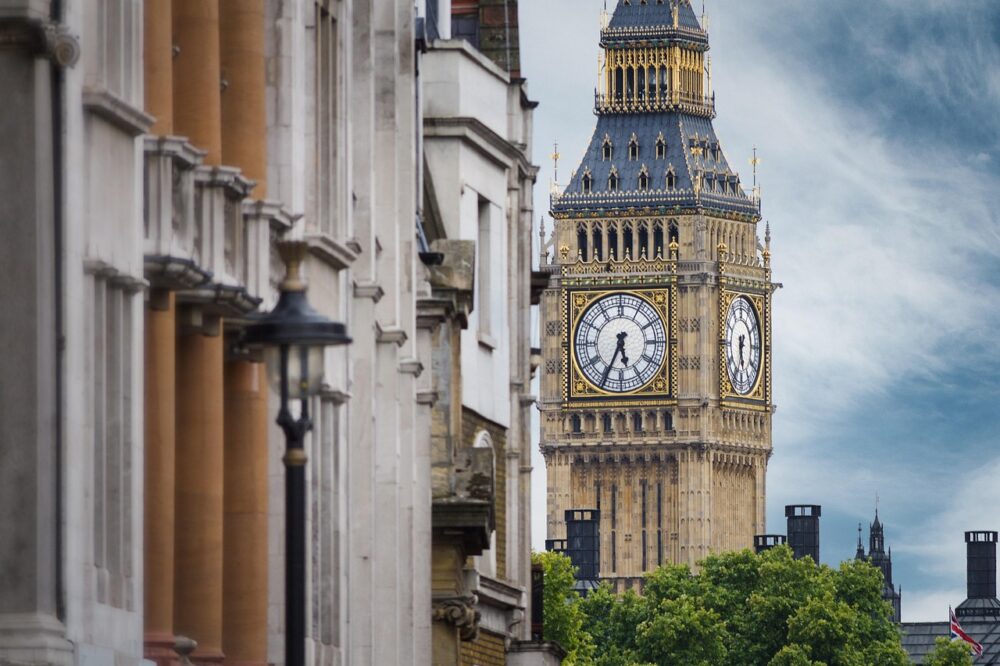
Photo by mathewbrowne on Pixabay

Thanks for this guide, it’s very clear. One thing: I’m a US citizen, and I’ve heard we can apply for the Student visa from within the UK if we’re already here on a visitor visa. Is that true?
Actually, no. US citizens cannot switch from a Visitor visa to a Student visa from within the UK. You must apply from your home country or country of residence. The only exceptions are for certain visa categories, like Tier 2 or Tier 4 dependents. So plan to submit your application from the US before you travel to the UK.
I’m applying for a PhD at Imperial College London. Do I need to pay the full first year’s tuition upfront to get the CAS, or can I show proof of a scholarship that covers it?
Great question. You do not need to pay the full tuition upfront. If you have a scholarship or funding that covers your fees and living costs, you can provide an official award letter as financial evidence. The university will issue the CAS once you have accepted the offer and met any deposit requirements, which vary by institution. Check with Imperial’s admissions team for their specific deposit policy.
I’m confused about the 28-day rule for bank statements. Does the closing balance need to be above the required amount for the whole 28 days, or just at the end?
The funds must be held for at least 28 consecutive days, and the closing balance on the statement must show the required amount at the end of that period. However, the balance cannot drop below the required amount at any point during those 28 days. So you need to maintain the minimum balance throughout the entire 28-day period before the application date.