
Table des matières:
Defining the Basilica of Saint-Sernin: A Romanesque Landmark
The Basilica of Saint-Sernin is a large Romanesque church in Toulouse, France, built between the 11th and 12th centuries. It is one of the largest remaining Romanesque buildings in Europe and a key stop on the Camino de Santiago (Way of St. James). The basilica is dedicated to Saint Saturnin (Sernin), the first bishop of Toulouse, who was martyred in the 3rd century. Its distinctive brick and stone construction, soaring bell tower, and vast interior make it a masterpiece of medieval architecture.
Why Is the Basilica of Saint-Sernin So Important?
The basilica’s significance spans religious, historical, and architectural realms. It is a UNESCO World Heritage site as part of the Routes of Santiago de Compostela in France. For pilgrims, it has served as a major sanctuary and resting point for centuries. Architecturally, it exemplifies the Romanesque style with its barrel-vaulted nave, radiating chapels, and intricate sculptural decoration. The church also houses an extensive collection of relics, making it a major pilgrimage destination in its own right.
The History Behind the Basilica of Saint-Sernin
From Martyrdom to Basilica
The story begins with Saint Saturnin (Sernin), who was martyred around 250 AD. According to tradition, he was tied to a wild bull and dragged through the streets of Toulouse. His body was later recovered and buried on the site where the basilica now stands. A small oratory was first built, then a larger church, and finally the current basilica was constructed starting in the late 11th century.
Construction and Expansion
Construction of the present basilica began around 1080 and continued into the 12th century. The church was designed to accommodate large numbers of pilgrims visiting the relics. The nave was completed by the early 12th century, and the famous bell tower was added later, around the 13th century. The basilica was consecrated in 1096 by Pope Urban II, though work continued for decades.
Restoration and Modern Times
Over the centuries, the basilica underwent changes, including the addition of Gothic elements and later restorations. In the 19th century, architect Eugène Viollet-le-Duc led a major restoration to preserve its Romanesque character. Today, the Basilica of Saint-Sernin remains an active church and a beloved landmark in Toulouse.
Architecture and Design of the Basilica of Saint-Sernin
Exterior: Brick and Stone Harmony
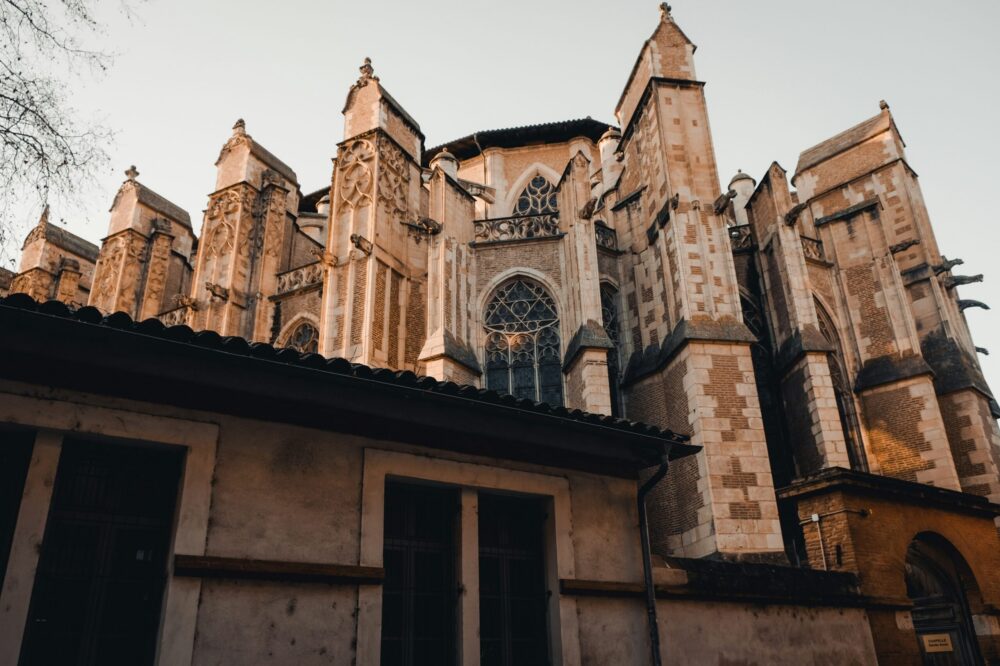
The basilica is built primarily of brick, a common material in the Toulouse region, with stone accents. The most striking feature is the octagonal bell tower, which rises 64 meters (210 feet) and is adorned with twin windows and a spire. The exterior also features a large rose window and a portal with carved tympanums depicting biblical scenes.
Interior: A Vast Pilgrimage Church
Inside, the basilica measures 115 meters (377 feet) in length, making it one of the longest Romanesque churches. The nave is covered by a barrel vault, and the aisles are double on each side, a design that allowed pilgrims to circulate easily. The apse is surrounded by an ambulatory with five radiating chapels, each containing altars and relics.
Key Architectural Features
- Nave and Aisles: The central nave is flanked by double aisles, creating a spacious interior.
- Transept and Crossing Tower: The transept arms are short, and the crossing is topped by a lantern tower.
- Ambulatory and Chapels: The ambulatory allows visitors to walk around the choir and access the chapels.
- Crypt: Beneath the choir lies the crypt, which houses the relics of Saint Saturnin and other saints.
The Relics of Saint-Sernin: A Pilgrim’s Treasure
The Basilica of Saint-Sernin is renowned for its collection of relics, which attracted pilgrims from across Europe. The crypt contains the tomb of Saint Saturnin, along with relics of other saints, including fragments of the True Cross and remains of early Christian martyrs. The relics were displayed in ornate reliquaries, many of which have been preserved. The basilica’s role as a relic repository made it a major stop on the Camino de Santiago.
The Basilica of Saint-Sernin and the Camino de Santiago
As a UNESCO-listed site on the Routes of Santiago de Compostela, the basilica has been a vital pilgrimage destination for centuries. Pilgrims on the Via Tolosana (one of the four French routes) would stop here to venerate the relics and receive a blessing. The basilica’s design, with its spacious interior and radiating chapels, was specifically adapted to accommodate large numbers of pilgrims. Today, it remains a popular stop for modern pilgrims and tourists alike.
Visiting the Basilica of Saint-Sernin: Practical Tips
Recommended travel products
As an Amazon Associate, we may earn from qualifying purchases.


Location and Hours
The basilica is located in the heart of Toulouse at Place Saint-Sernin. It is open daily, with free entry to the main church. The crypt and cloister require a small fee. Check the official website for current hours, as they may vary by season.
What to See
- The Nave and Ambulatory: Walk the length of the nave and explore the ambulatory chapels.
- The Crypt: Descend to see the relics and the tomb of Saint Saturnin.
- The Bell Tower: Climb the tower for panoramic views of Toulouse (if open).
- The Cloister: Visit the peaceful cloister, which houses a museum of religious art.
Tips for Your Visit
- Allow at least 1–2 hours to explore thoroughly.
- Visit early in the morning or late afternoon to avoid crowds.
- Photography is allowed inside but without flash.
- Consider joining a guided tour to learn more about the history and architecture.
Common Mistakes to Avoid When Visiting
- Missing the crypt: Many visitors skip the crypt, but it’s essential for understanding the basilica’s significance.
- Not walking the ambulatory: The ambulatory and its chapels are a key feature of pilgrimage churches.
- Ignoring the exterior details: Look for the carved capitals and tympanums on the portals.
- Forgetting to check tower access: The bell tower climb is not always open; inquire ahead.
Nearby Attractions and Further Exploration
After visiting the basilica, explore the surrounding Saint-Sernin district, which offers cafes, shops, and the nearby Musée des Augustins (fine arts museum). The Capitole de Toulouse and the Garonne River are also within walking distance. For those interested in Romanesque architecture, other notable churches in the region include the Basilica of Saint-Sernin’s sister church, the Abbey Church of Sainte-Foy in Conques.
Frequently Asked Questions About the Basilica of Saint-Sernin
Is the Basilica of Saint-Sernin free to enter?
Yes, the main church is free to enter. The crypt and cloister require a ticket (around €5–€8).
How old is the Basilica of Saint-Sernin?
Construction began around 1080, making it over 900 years old. It was consecrated in 1096 but completed later.
What is the Basilica of Saint-Sernin made of?
It is built primarily of brick, with stone details. This is typical of the Romanesque architecture in the Toulouse region.
Can you climb the bell tower of Saint-Sernin?
Yes, when open. The tower offers excellent views of Toulouse. Check the basilica’s website for current access.
Why is the Basilica of Saint-Sernin a UNESCO World Heritage site?
It is part of the Routes of Santiago de Compostela in France, recognized for its exceptional Romanesque architecture and its role in pilgrimage.
What relics are kept in the Basilica of Saint-Sernin?
The crypt contains the relics of Saint Saturnin, along with other saints, including fragments of the True Cross and remains of early martyrs.
Final Thoughts: The Enduring Legacy of the Basilica of Saint-Sernin
The Basilica of Saint-Sernin is more than just a church; it is a testament to medieval faith, art, and engineering. Its towering presence in Toulouse reminds visitors of the city’s rich history as a pilgrimage hub. Whether you are a history enthusiast, an architecture lover, or a spiritual seeker, this Romanesque masterpiece offers a profound experience. Plan your visit to fully appreciate its grandeur and the stories carved into its stones.

Great article! I’m planning a trip to Toulouse later this year. Can you tell me if the basilica is still an active church and if there are any restrictions for visitors during services?
Yes, the Basilica of Saint-Sernin is still an active parish church. Visitors are welcome during services, but it’s best to be respectful—avoid touring during Mass, and keep quiet. Check the official website for updated visiting hours and service times.