
Table des matières:
Introduction to Free Birdwatching in Barcelona
Barcelona, known for its vibrant culture and stunning architecture, is also a hidden gem for birdwatchers. If you’re wondering what free birdwatching spots are in Barcelona in 2026, you’re in for a treat. The city and its surroundings offer diverse habitats—from coastal wetlands to urban parks—all accessible without an entrance fee. This guide covers the top free locations where you can observe a variety of bird species, including migrants, residents, and rare visitors. Whether you’re a seasoned birder or a curious beginner, these spots provide excellent opportunities for birding year-round.
Why Barcelona is a Birdwatching Paradise in 2026
Barcelona’s geographical location on the Mediterranean coast, combined with its proximity to the Llobregat Delta, Collserola Natural Park, and Montjuïc, creates a unique crossroads for avian life. In 2026, conservation efforts continue to enhance these habitats, making free birdwatching more rewarding than ever. The city’s mild climate allows for year-round birding, with peak seasons during spring and autumn migrations. Best of all, many prime locations are free and easily accessible by public transport.
Top Free Birdwatching Spots in Barcelona (2026)
1. Parc de la Ciutadella
Located in the heart of Barcelona, Parc de la Ciutadella is a historic park that offers excellent free birdwatching. The park’s lake and lush gardens attract waterfowl, songbirds, and even migratory species. In 2026, you can expect to see mallards, coots, and grey herons, along with parakeets and finches. Early morning visits are best for avoiding crowds and spotting more species.
- Key species: Mallard, common coot, grey heron, monk parakeet, European serin.
- Tips: Bring binoculars and visit on weekdays for a quieter experience.
2. Collserola Natural Park
Stretching over 8,000 hectares, Collserola Natural Park is a vast green belt on the outskirts of Barcelona. It offers numerous free trails and viewpoints for birdwatching. In 2026, the park is home to raptors like the Eurasian sparrowhawk and common buzzard, as well as woodland birds such as the great spotted woodpecker and firecrest. The park’s diverse habitats include Mediterranean forest, scrubland, and streams.
- Key species: Eurasian sparrowhawk, common buzzard, great spotted woodpecker, firecrest, Sardinian warbler.
- Tips: Use the Carretera de les Aigües trail for panoramic views and bird activity.
3. Llobregat Delta (Free Areas)
The Llobregat Delta is one of Catalonia’s most important wetlands, and several areas are free to access. While some parts require permits, the Remolar-Filipinas reserve and the Cal Tet observation points are open to the public at no cost. In 2026, the delta hosts herons, egrets, flamingos, and numerous waders during migration. It’s a must-visit for any birder in Barcelona.
- Key species: Little egret, purple heron, greater flamingo, black-winged stilt, common sandpiper.
- Tips: Bring a scope for distant birds; avoid midday heat in summer.
4. Montjuïc Hill
Montjuïc, the hill overlooking Barcelona’s port, offers a mix of gardens, parks, and rocky slopes ideal for birdwatching. Free spots include the Montjuïc Cemetery gardens and the Mirador de l’Alcalde. In 2026, look for rock buntings, black redstarts, and migratory passerines. The hill also provides excellent views of the city and the sea.
- Key species: Black redstart, rock bunting, common kestrel, pallid swift, woodchat shrike.
- Tips: Explore the botanical gardens for additional species.
5. Parc del Fòrum
Built for the 2004 Universal Forum of Cultures, Parc del Fòrum is a modern coastal park with open spaces, a large esplanade, and a small lagoon. It’s a free spot that attracts gulls, terns, and waders. In 2026, the park is particularly good for Audouin’s gull and sandwich tern. The artificial beach and rocky areas are worth scanning.
- Key species: Audouin’s gull, sandwich tern, yellow-legged gull, common ringed plover, sanderling.
- Tips: Visit during migration periods for the best variety.
Seasonal Highlights for Free Birdwatching in Barcelona
Spring (March–May)
Spring brings a wave of migrants, including nightingales, warblers, and flycatchers. Wetlands like the Llobregat Delta are bustling with herons and waders. Collserola Park is alive with breeding birds. This is the best season for birdwatching in Barcelona.
Autumn (September–November)
Autumn migration sees birds moving south. Look for raptors over Collserola and waders at the delta. The Parc del Fòrum hosts terns and gulls. Many species can be seen at free spots without crowds.
Winter (December–February)
Winter brings waterfowl and gulls to the coast and parks. The Llobregat Delta is excellent for ducks and grebes. Parc de la Ciutadella and Montjuïc have resident birds. It’s a quieter time for birding.
Summer (June–August)
Summer is hot but productive for breeding birds. Early mornings are key. Collserola and Montjuïc offer shade and birds like woodpeckers and shrikes. The delta has flamingos and herons.
Essential Tips for Free Birdwatching in Barcelona
- Bring binoculars: Most spots require good optics for distant birds.
- Use public transport: Barcelona’s metro and buses reach many birding areas.
- Check local birding groups: Join free guided walks organized by ICO or SEO/BirdLife.
- Respect nature: Stay on trails and avoid disturbing birds.
- Download bird apps: Use Merlin Bird ID or eBird for identification.
Conclusion: Your Free Birdwatching Adventure in 2026
Barcelona offers an abundance of free birdwatching spots in 2026, from urban parks to natural reserves. Whether you explore Collserola’s forests, the Llobregat Delta’s wetlands, or Montjuïc’s rocky slopes, you’ll find diverse birdlife without spending a cent. Remember to plan according to seasons and bring essential gear. So, if you’ve been asking what free birdwatching spots are in Barcelona in 2026, now you have a comprehensive guide to start your avian adventure. Happy birding!
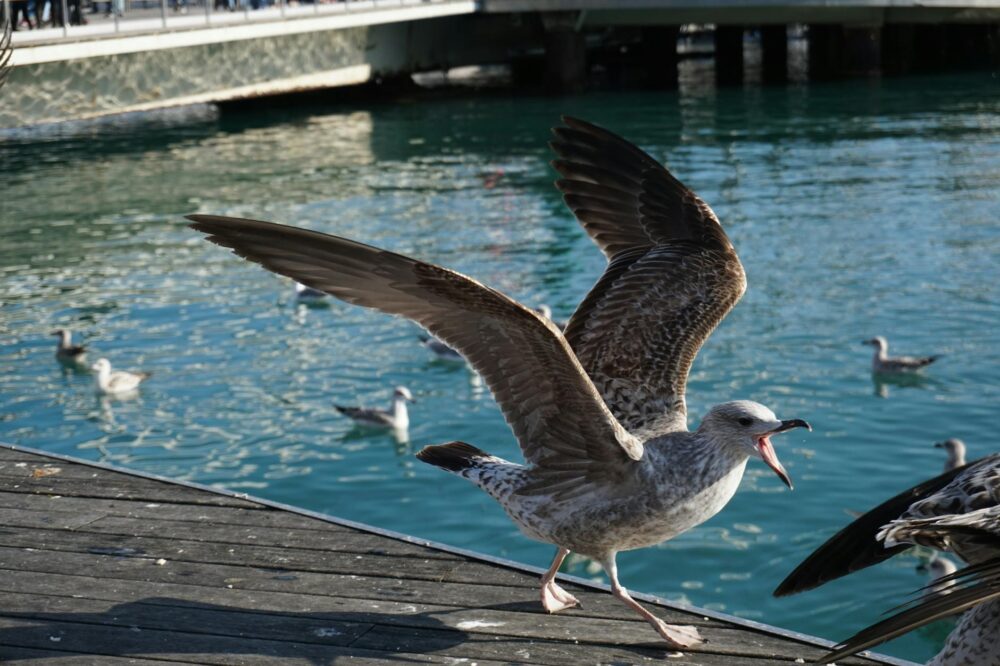
Photo by Mihai Gabriel on Pexels


Are there any free guided birdwatching tours in Barcelona? I’m new to birding and would love some expert help.
While most free spots are self-guided, check local birding groups like ICO (Catalan Ornithological Institute) for occasional free outings. Otherwise, bring a field guide or use birding apps to identify species on your own.
I visited Parc de la Ciutadella last spring and saw monk parakeets nesting. Are they there year-round?
Yes, monk parakeets are resident in Barcelona and can be seen year-round in Parc de la Ciutadella and other parks. They are especially active during breeding season (spring to summer).
What time of day is best for birdwatching at Collserola Natural Park?
Early morning (around sunrise) is ideal, as birds are most active then. Late afternoon can also be good. Weekdays are quieter, offering a more peaceful experience.
Are there any free birdwatching spots near the beach? I’d like to combine birding with a day at the coast.
Parc del Fòrum is a great coastal option with free access. It’s right by the sea and attracts gulls, terns, and waders. Also, the Llobregat Delta has free areas near the beach, like Remolar-Filipinas.
I’m planning a trip in November. What species can I expect to see at the Llobregat Delta?
In November, you’ll see autumn migrants like common sandpipers, black-winged stilts, and perhaps greater flamingos. Winter visitors such as little egrets and grey herons are also present.
Do I need any special equipment for birdwatching at these free spots?
Binoculars are highly recommended. A field guide or birding app helps with identification. For wetland spots like Llobregat Delta, a spotting scope is useful for distant birds. Comfortable shoes and water are also important.
Is Montjuïc Cemetery really a good birdwatching spot? That sounds unusual.
Yes, the gardens around Montjuïc Cemetery are surprisingly good for birding. The mix of trees, shrubs, and rocky areas attracts species like black redstarts, rock buntings, and common kestrels. It’s a quiet spot with fewer visitors.
Are dogs allowed at these birdwatching spots? I’d like to bring my dog along.
Dogs are generally allowed in Parc de la Ciutadella and Collserola Natural Park, but must be leashed in some areas. In Llobregat Delta free zones, dogs may be restricted to protect wildlife. Always check local signage.
Super article ! Je prévois un voyage à Barcelone au printemps 2026 et j’aimerais savoir si le Parc de la Ciutadella est facilement accessible en transports en commun depuis le centre-ville ?
Merci ! Oui, le Parc de la Ciutadella est très bien desservi : vous pouvez prendre le métro (ligne 1, station Arc de Triomf, ou ligne 4, station Ciutadella-Vila Olímpica) ou plusieurs bus. Le parc est à quelques minutes à pied de ces arrêts.
Est-ce que le delta du Llobregat est vraiment gratuit ? J’ai cru comprendre que certaines zones étaient payantes ou nécessitaient une réservation.
Effectivement, certaines parties du delta sont réglementées, mais les zones mentionnées dans l’article (Remolar-Filipinas et Cal Tet) sont gratuites et ouvertes au public. Pensez à vérifier les horaires d’ouverture sur le site officiel avant votre visite.
Je suis débutant en observation d’oiseaux. Quels spots recommandez-vous pour commencer facilement sans matériel sophistiqué ?
Pour débuter, le Parc de la Ciutadella est idéal : les oiseaux y sont habitués au public et vous pouvez les observer avec de simples jumelles. Le Parc del Fòrum est aussi facile d’accès et permet de voir des goélands et sternes sans se déplacer trop loin.
Y a-t-il des risques de rencontrer des tiques ou autres nuisibles dans le parc de Collserola ?
Comme dans toute zone naturelle, il est prudent de rester sur les sentiers balisés et de porter des vêtements longs. Les tiques sont plus fréquentes dans les herbes hautes, surtout au printemps et en été. Un répulsif peut être utile.
Est-ce que Montjuïc est intéressant pour observer des rapaces ?
Oui, Montjuïc offre des observations régulières de faucons crécerelles et parfois de buses variables. Les falaises et les espaces ouverts attirent ces oiseaux. Le meilleur moment est le matin ou en fin d’après-midi.
L’article mentionne des visites en semaine pour le Parc de la Ciutadella. Est-ce que le week-end c’est vraiment trop fréquenté ?
Le week-end, le parc est plus animé, ce qui peut déranger les oiseaux les plus discrets. Cependant, vous pouvez tout de même observer les espèces communes comme les perruches ou les hérons. Si vous le pouvez, privilégiez les jours de semaine pour une expérience plus calme.
Super article ! Je prévois un voyage à Barcelone en mai 2026. Est-ce que le Parc de la Ciutadella est vraiment bien pour l’observation des oiseaux malgré l’affluence touristique ?
Merci ! Oui, le Parc de la Ciutadella reste un bon spot même avec les touristes. Pour éviter la foule, venez tôt le matin (avant 9h). Vous y verrez des perruches, des hérons et des foulques. N’oubliez pas vos jumelles !
J’aimerais savoir si le delta du Llobregat est accessible sans voiture. Y a-t-il des transports en commun pour s’y rendre depuis le centre de Barcelone ?
Tout à fait ! Vous pouvez prendre le train R2 Sud depuis Barcelone-Sants jusqu’à la gare de El Prat de Llobregat, puis un bus local (L10 ou L20) jusqu’aux zones d’observation gratuites comme Remolar-Filipinas. Comptez environ 45 minutes de trajet.
Je suis débutant en ornithologie. Quels sont les meilleurs spots gratuits pour observer facilement sans longues marches ?
Pour débuter, je recommande le Parc de la Ciutadella (plat et central) et le Parc del Fòrum (facile d’accès avec sa lagune). À Montjuïc, le Mirador de l’Alcalde est aussi accessible sans trop de dénivelé. Ces sites offrent une belle variété d’oiseaux sans effort excessif.
Bonjour, merci pour cet article très utile ! Je prévois de visiter Barcelone en avril 2026. Pouvez-vous me dire si le delta du Llobregat est facilement accessible en transports en commun depuis le centre-ville ?
Bonjour, merci pour votre question. Oui, le delta du Llobregat est accessible en transports en commun. Vous pouvez prendre le train R2 Sud depuis la gare de Sants jusqu’à la gare de Gavà ou Viladecans, puis marcher ou prendre un bus local jusqu’aux points d’observation gratuits comme Remolar-Filipinas. Il est conseillé de vérifier les horaires à l’avance. Bonne observation !
Je suis débutant en observation des oiseaux. Y a-t-il des sorties guidées gratuites dans ces parcs ?
Bonjour, pour les débutants, il n’y a généralement pas de sorties guidées gratuites régulières dans ces parcs, mais vous pouvez consulter les associations locales comme l’ICO (Institut Català d’Ornitologia) qui organisent parfois des activités ouvertes à tous. Sinon, les parcs comme la Ciutadella ou Montjuïc sont parfaits pour commencer seul avec des jumelles. N’hésitez pas à télécharger une application de reconnaissance d’oiseaux.
Super article ! Je suis allé à Collserola l’année dernière et j’ai vu des pics verts. Savez-vous si on peut aussi observer des hiboux en journée ?
Bonjour, ravi que l’article vous plaise. Observer des hiboux en journée est plus difficile car ce sont des oiseaux nocturnes. Cependant, à Collserola, vous pourriez apercevoir un hibou moyen-duc au repos dans un arbre dense, surtout tôt le matin ou en fin d’après-midi. Soyez discret et écoutez leurs appels. Bonne chance !
Est-ce que le Parc del Fòrum est intéressant en hiver ? Je vais à Barcelone en janvier 2026.
Bonjour, oui, le Parc del Fòrum reste intéressant en hiver. Vous pourrez y observer des goélands, des sternes et des limicoles hivernants. Les espèces comme le goéland d’Audouin sont présentes toute l’année. Prévoyez des vêtements chauds car le vent peut être fort près de la mer. Bonne visite !