

Table des matières:
Working as an International Student in Amsterdam: What You Need to Know
If you’re planning to study at a university in Amsterdam, you might be wondering: Can I work while studying at an Amsterdam university? The short answer is yes, but there are important rules depending on your nationality and whether you work part-time during the academic year or full-time during holidays. This guide covers everything from work permits to tax numbers, so you can make informed decisions.
Who Can Work Without a Permit?
Students from the European Economic Area (EEA) and Switzerland can work in the Netherlands without any restrictions. They are free to take any job, any number of hours, and do not need a work permit. If you are an EU/EEA or Swiss national, you can simply start working once you have a student residence permit (or just your valid ID/passport).
Non-EU/EEA Students: Work Permit and Hour Limits
If you are from outside the EEA, you need a residence permit for study purposes. With that permit, you are allowed to work under two schemes:
1. Part-Time Work (Max 16 Hours per Week)
During the academic year (September to June), you can work a maximum of 16 hours per week. Your employer must apply for a work permit (TWV) on your behalf, which is valid for up to one year. You must have a valid student residence permit. The work permit is tied to the employer, so if you change jobs, your new employer must apply for a new permit.
2. Full-Time Work During Holidays (June, July, August)
During the summer holidays (June, July, August), you can work full-time, up to 40 hours per week, but your employer still needs a work permit. This is a great opportunity to earn more money without exceeding the weekly limit.
Important: Combined Hour Limit
You cannot work more than 16 hours per week during the academic year and then also work full-time during holidays if you exceed the annual limit. The Dutch immigration service (IND) checks that you do not work more than a certain number of hours per year. The exact rule: you may work a maximum of 16 hours per week OR full-time during holidays, but not both in the same week. So plan your work schedule carefully.
Seasonal Work Option
Alternatively, you can work full-time during the months of June, July, and August (max 40 hours/week) without a separate work permit if you have a student residence permit. However, your employer must still notify the UWV (Employee Insurance Agency) and obtain a TWV if required. Actually, the seasonal work option is part of the same scheme: you can work full-time only during the summer months, and part-time the rest of the year. The key is that your total working hours per week must not exceed 16 during the academic year.
How to Get a Work Permit (TWV) – Step by Step
If you are a non-EU student, your employer is responsible for applying for a work permit. Here’s the process:
- Find a job: Your employer must be willing to sponsor your work permit.
- Employer applies: The employer submits a request for a TWV to the UWV. This can take up to 5 weeks.
- Check your residence permit: Your student residence permit must be valid and state that you are allowed to work (most do).
- Receive the permit: Once approved, the TWV is sent to your employer. Make a copy for yourself.
- Start working: You can start only after the TWV is issued.
Tip: Apply for jobs early, as the TWV process can take time. Some employers are not familiar with the procedure, so you may need to explain it.
Taxes and Social Security
As a student working in the Netherlands, you will pay income tax and social security contributions. However, you may be eligible for certain tax benefits:
- Tax credit (loonheffingskorting): You can apply for this with your employer to reduce the amount of tax withheld from your salary. You need to request a provisional tax assessment from the Dutch Tax and Customs Administration (Belastingdienst).
- Yearly tax return: Even if you don’t owe tax, filing a return can help you get back any overpaid tax.
- BSN (Citizen Service Number): You need a BSN to work legally and pay taxes. You get this when you register with the municipality (gemeente) in Amsterdam.
Finding a Job as a Student in Amsterdam

Amsterdam has a vibrant job market for students. Common student jobs include:
- Hospitality (restaurants, bars, hotels)
- Retail (shops, supermarkets)
- Tutoring (language, academic subjects)
- Internships (paid or unpaid, check visa conditions)
- Freelance work (subject to rules – you may need a special permit)
Where to look:
- Online job boards like Indeed, Monsterboard, and StudentJob
- University career services and job portals
- Social media groups for international students in Amsterdam
- Walking in and asking at local businesses
Can You Work as a Freelancer or Start Your Own Business?
Yes, but the rules are stricter. As a non-EU student, you can work as a self-employed person if you have a residence permit for study and you obtain a work permit as a self-employed person. The IND requires that your self-employment does not interfere with your studies. You must also register with the Dutch Chamber of Commerce (KVK) and the Tax Office. This option is more complex, so consult with your university’s international office before pursuing it.
Common Mistakes to Avoid
- Working without a permit: If you work more than allowed or without a TWV, you risk fines and even revocation of your residence permit.
- Exceeding hour limits: Keep track of your hours. Employers are required to report hours, but you are also responsible.
- Ignoring tax obligations: Even if you earn little, you may need to file a tax return. Not doing so can cause problems later.
- Not updating your residence permit: If you change your study program or extend your studies, ensure your residence permit remains valid for work.
Practical Checklist: Before You Start Working
| Step | Action | Details |
|---|---|---|
| 1 | Check your residence permit | Ensure it states you are allowed to work (most student permits do). |
| 2 | Get a BSN | Register with the municipality in Amsterdam to get your Citizen Service Number. |
| 3 | Apply for a tax credit | Request loonheffingskorting from the Belastingdienst to reduce tax. |
| 4 | Find a job | Use job portals, university services, or networking. |
| 5 | Employer applies for TWV | Non-EU students: ensure your employer obtains a work permit. |
| 6 | Sign a contract | Make sure you have a written employment contract stating hours and pay. |
| 7 | Track your hours | Keep a log to ensure you don’t exceed limits. |
Frequently Asked Questions
Can I work full-time during the summer if I also work part-time during the year?
No, you cannot combine both in the same week. You can either work up to 16 hours per week during the academic year OR full-time during the summer holidays (June, July, August), but not both simultaneously. However, you can work part-time during the year and then full-time in the summer, as long as you don’t exceed the 16-hour limit during term time.
Do I need a work permit for an internship?
It depends. If the internship is part of your curriculum and mandatory, you usually do not need a work permit. If it is voluntary or optional, you may need a TWV if you are a non-EU student. Check with your university’s internship office.
Can I work remotely for a company outside the Netherlands?
Yes, you can work remotely for a foreign company, but you must still comply with Dutch labor laws and tax regulations. If you are physically in the Netherlands while working, you may need a work permit depending on your nationality and the nature of the work. Consult an immigration lawyer for complex cases.
What happens if I work more than 16 hours per week?
Exceeding the limit is a violation of your residence permit conditions. The IND may impose a fine or revoke your permit. Your employer may also face penalties. Always stay within the allowed hours.
Can I work during my first year of studies?
Yes, you can work from the start of your studies, as long as you have a valid residence permit and the necessary work permit (if non-EU). There is no waiting period.
Do I need to speak Dutch to get a student job?
Not necessarily. Many student jobs in Amsterdam, especially in hospitality and retail, are open to English speakers. However, knowing some Dutch can broaden your opportunities.
Final Practical Advice for Student Workers in Amsterdam
Working while studying at an Amsterdam university can be a rewarding experience, providing extra income and valuable skills. To make the most of it, plan ahead: understand your visa conditions, get your BSN early, and communicate with potential employers about work permit requirements. Keep track of your hours and tax documents. If you ever feel unsure, consult your university’s international student office or the IND directly. With the right preparation, you can balance work and studies successfully in one of Europe’s most dynamic cities.
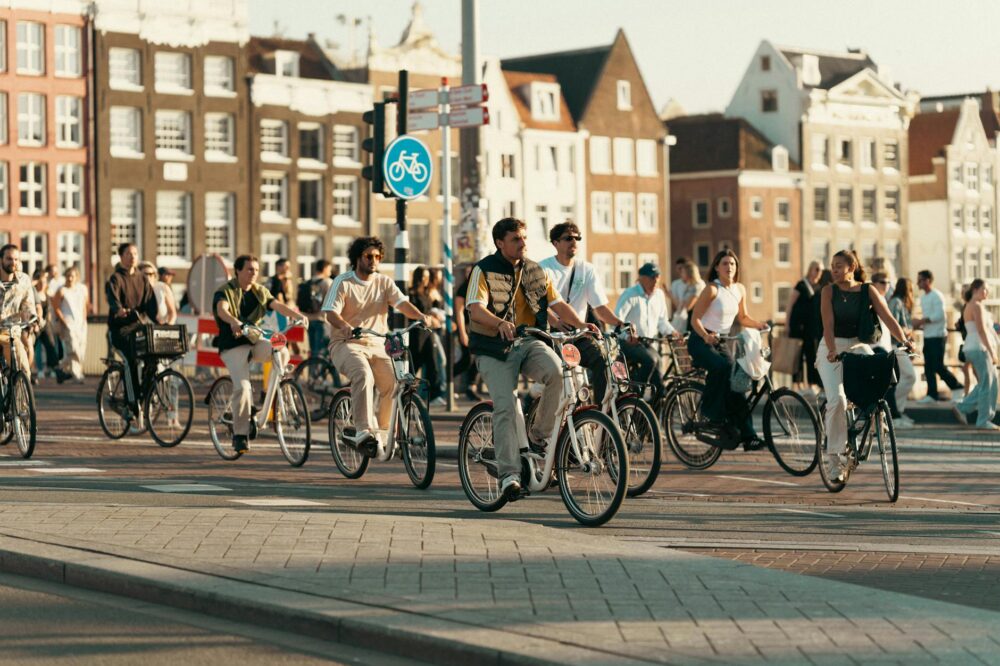
Photo by iulian_ursache on Pixabay
I’m a non-EU student and I’m confused about the combined hour limit. Can I work 16 hours per week during the academic year and then also work full-time during the summer holidays?
The combined limit means you cannot work both 16 hours per week during the academic year AND full-time during the summer. You must choose one option per week: either part-time (max 16 hours) or full-time (max 40 hours) but only during the summer months. During the academic year, you are limited to 16 hours per week. So plan ahead: if you work part-time during the year, you cannot also work full-time in the summer.