

The history of Nice stretches back over two millennia, shaped by ancient Greeks, Romans, medieval counts, and modern tourists. Located on the French Riviera, Nice offers a unique blend of Mediterranean cultures. This article explores its evolution, key historical milestones, and lasting legacy.
Table des matières:
Ancient Origins: The Greek Foundation of Nikaia
Around 350 BC, Greek settlers from Phocaea (modern-day Foça, Turkey) established a trading post on the shores of what is now Nice. They named it Nikaia, after the goddess of victory, Nike. The settlement thrived due to its natural harbor and strategic position along Mediterranean trade routes.
The Greeks introduced olive cultivation, viticulture, and urban planning. Remnants of this era are scarce, but the name “Nice” directly descends from Nikaia. The Greek influence set the stage for later Roman expansion.
Roman Era: Cemenelum and the Rise of a Regional Hub
In the 1st century BC, the Romans conquered the region and established the town of Cemenelum (modern Cimiez), located on a hill above the Greek settlement. Cemenelum became the capital of the Alpes Maritimae province, with a forum, amphitheater, baths, and aqueducts. The Roman presence lasted until the 5th century AD, leaving behind archaeological sites like the Roman amphitheater of Cimiez and the Baths of Cimiez.
After the fall of the Western Roman Empire, Nice suffered invasions by barbarians and was eventually taken by the Lombards in the 6th century. It later became part of the Kingdom of the Lombards and then the Carolingian Empire.
Medieval Nice: From County to Protectorate
During the Middle Ages, Nice was contested by various powers. In the 10th century, it became part of the County of Provence. The city built fortifications, including the Castle of Nice (Château de Nice), which stood on a rocky hill overlooking the Baie des Anges.
In 1388, the city placed itself under the protection of the Duchy of Savoy to avoid domination by the Counts of Provence. This event, known as the Dédicace de Nice, marked a shift in allegiance that lasted until 1860. Under Savoyard rule, Nice enjoyed relative autonomy and became a key port.
The 16th and 17th Centuries: Wars and Rebuilding
Nice faced numerous sieges by French and Ottoman forces. In 1543, the city was besieged by the Ottoman fleet allied with France, leading to the destruction of parts of the city. The castle was heavily damaged but later rebuilt. In the 17th century, the city expanded beyond its medieval walls, and new districts like Port Lympia were developed.
During this period, Nice became a haven for Italian and French nobles, attracted by its mild climate and scenic beauty. The city’s economy relied on trade, agriculture, and later, tourism.
The 19th Century: Annexation to France and the Birth of Tourism
The 19th century was transformative for the history of Nice. In 1860, as part of the Treaty of Turin, the County of Nice was ceded to France in exchange for French support in the Italian unification. The annexation was confirmed by a plebiscite, though some residents opposed it. Nice became part of the Alpes-Maritimes department.
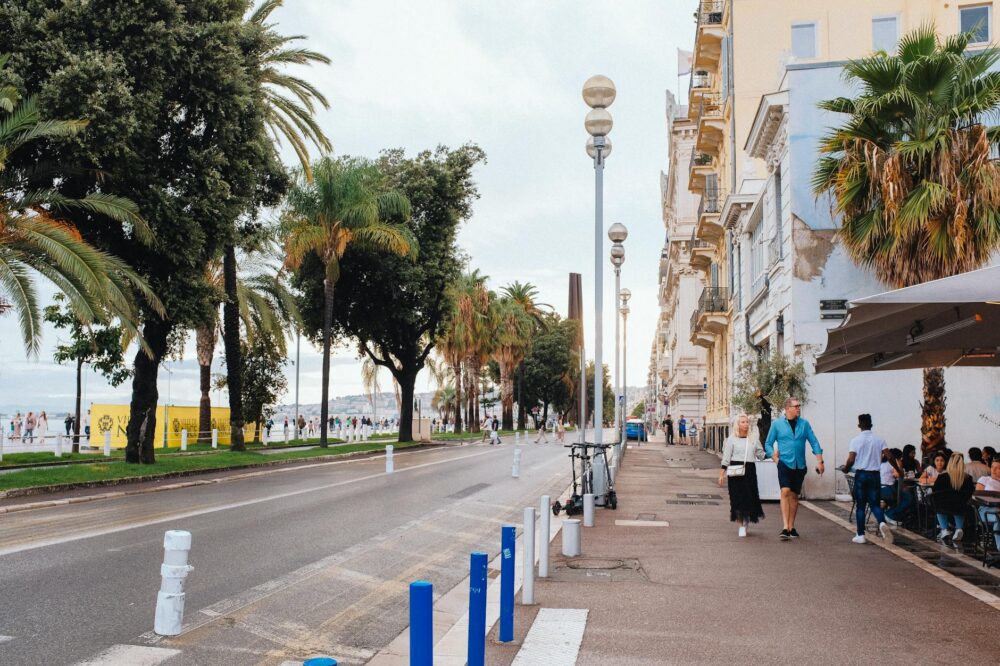
Simultaneously, Nice emerged as a premier tourist destination. British aristocrats, such as the Reverend Thomas Cooke, popularized winter tourism. The Promenade des Anglais was built along the coastline, funded by the English community. The arrival of the railway in 1864 further boosted tourism, making Nice accessible to a broader European elite.
Belle Époque Glamour and Urban Expansion
During the Belle Époque (1871–1914), Nice experienced a golden age. Grand hotels, casinos, and villas were built, including the Hôtel Negresco (1913). The city hosted royalty, artists, and writers, such as Queen Victoria, who visited in the 1890s, and Friedrich Nietzsche, who wrote part of Thus Spoke Zarathustra while living in Nice.
The city expanded northward and eastward, with new neighborhoods like Carabacel and Riquier. The Russian Orthodox Cathedral was built in 1912 to serve the growing Russian community.
20th Century: Wars, Recovery, and Modernization
World War I slowed tourism, but Nice recovered in the 1920s. During World War II, Nice was occupied by Italian and later German forces. The city suffered damage but was liberated in August 1944. After the war, Nice rebuilt and modernized its infrastructure.
In the post-war period, Nice became a major cultural and economic center. The Nice Carnival was revived, and the city invested in museums, such as the Musée Matisse (1963) and the Musée d’Art Moderne et d’Art Contemporain (1990). The University of Nice Sophia Antipolis was founded in 1965, strengthening its role as an educational hub.
Contemporary Nice: Challenges and Resilience

![[Certifié Apple MFi] Chargeur iPhone 14, Rombica 4Pack 20W USB-C Secteur Adaptateur Chargeur Mural Type-C Charge Rapide Avec Câble Type-C vers Lightning 2M Pour iPhone 14 13 12 11 Pro Max XS XR X iPad : Amazon.fr: High-Tech](https://eurovistatrips.com/wp-content/uploads/2026/05/611H375xWJL._AC_SX679_.jpg)

In the 21st century, Nice has faced challenges, including the 2016 terrorist attack on the Promenade des Anglais. The city has shown resilience, continuing to attract millions of tourists annually. Recent urban projects, like the Promenade du Paillon park and the Tramway, have improved quality of life.
Nice was designated a UNESCO World Heritage Site in 2021 as part of the “Nice, Winter Resort Town of the Riviera” inscription, recognizing its unique architectural and urban heritage from the 18th to 20th centuries.
Key Historical Sites to Visit in Nice
To experience the history of Nice firsthand, consider these landmarks:
- Vieux Nice (Old Town): Narrow streets, baroque churches, and the Palais Lascaris.
- Castle Hill (Colline du Château): Ruins of the medieval castle and panoramic views.
- Cimiez Roman Ruins: Amphitheater, baths, and the Musée Archéologique.
- Promenade des Anglais: Iconic seafront boulevard built in the 19th century.
- Place Masséna: Main square with architecture reflecting Nice’s French and Italian influences.
- Russian Orthodox Cathedral: St. Nicholas Cathedral, a symbol of the Russian community.
- Hôtel Negresco: Historic luxury hotel with Belle Époque decor.
Cultural Influences: A Blend of French and Italian
Nice’s history as part of Savoy and its proximity to Italy have created a distinct culture. The local dialect, Niçard, is a Romance language related to Provençal and Italian. Cuisine features specialties like socca (chickpea pancake), pissaladière (onion tart), and farcis niçois (stuffed vegetables). The Nice Carnival, one of the world’s largest, reflects this vibrant heritage.
Mistakes to Avoid When Exploring Nice’s History
- Rushing through Old Town: Allocate at least half a day to explore its alleys and monuments.
- Missing Cimiez: Many visitors skip the Roman ruins and museums.
- Ignoring local cuisine: Try authentic Niçoise dishes, not just French classics.
- Not visiting during Carnival: The festival offers a unique cultural experience.
- Overlooking the 19th-century architecture: The Promenade and grand hotels are integral to Nice’s identity.
Practical Checklist for History Enthusiasts
| Site | Era | Tip |
|---|---|---|
| Greek Nikaia | 350 BC | No visible ruins; visit Musée d’Archéologie de Nice for artifacts. |
| Roman Cemenelum | 1st-5th c. AD | Combine with Musée Matisse in Cimiez. |
| Castle Hill | Medieval | Climb for sunset views; free admission. |
| Promenade des Anglais | 19th c. | Walk the entire length for architectural details. |
| Belle Époque Hotels | Late 19th-early 20th c. | Visit interiors of Negresco or Palais de la Méditerranée. |
Frequently Asked Questions about the History of Nice
Who founded Nice?
Greek settlers from Phocaea founded Nice around 350 BC, naming it Nikaia.
Why is Nice called “Nice”?
The name derives from the Greek “Nikaia,” meaning victory, after the goddess Nike.
When did Nice become part of France?
Nice was annexed by France in 1860 following the Treaty of Turin.
What is the significance of the Promenade des Anglais?
Built in the 19th century by the English community, it symbolizes Nice’s transformation into a tourist destination.
What are the best museums for Nice’s history?
Musée d’Archéologie de Nice (Roman history), Musée Masséna (local history), and Palais Lascaris (baroque art).
Is Nice a UNESCO World Heritage site?
Yes, inscribed in 2021 as “Nice, Winter Resort Town of the Riviera.”
Your Next Step: Explore Nice’s Rich Past
Understanding the history of Nice enriches any visit. Start at the Roman ruins in Cimiez, wander through Old Town, and stroll the Promenade des Anglais. For deeper insight, join a guided walking tour or visit the local museums. Whether you’re a history buff or a casual traveler, Nice offers layers of discovery waiting to be uncovered.
I didn’t realize Nice was part of Savoy for so long. How did that affect the local culture and language?
The Savoyard period left a strong Italian influence on Nice’s culture, cuisine, and dialect (Nissart, which is a blend of Occitan and Ligurian). Even today, you’ll find Italian-inspired dishes like socca and a distinct local identity that sets Nice apart from the rest of France.
Nice article! Could you recommend a good museum to learn more about Nice’s history?
Certainly! The Musée d’Art et d’Histoire (Palais Masséna) covers Nice’s 19th-century history and tourism boom. For ancient history, visit the Musée d’Archéologie de Nice in Cimiez, which features Roman artifacts from Cemenelum.
I’m planning a trip to Nice. Are there any well-preserved Roman sites I can visit?
Yes! The Cimiez district has the best Roman ruins: an amphitheater, thermal baths, and an archaeological museum. The ruins are free to explore, and the nearby monastery gardens offer a lovely setting. It’s a must-see for history buffs.
What about the castle mentioned? Is it still standing?
The Château de Nice was largely demolished in the 18th century by order of Louis XIV. Today, the hill is a public park (Parc du Château) offering panoramic views of the city and the Bay of Angels, but only a few ruins remain.
Great article! I’m curious about the Greek settlement. Are there any visible remains of Nikaia in Nice today?
Thank you! Unfortunately, very few physical remains of the Greek settlement survive above ground. However, you can find artifacts in the Musée d’Archéologie de Nice and the site of the Greek port is near modern-day Place Garibaldi. The name ‘Nice’ itself is a lasting legacy.
How did the annexation to France in 1860 change daily life for the people of Nice?
The annexation brought French administration, language, and laws. Many residents initially resisted, but over time, French became dominant. Economically, it boosted tourism as Nice became more accessible via the new railway, attracting wealthy winter visitors from across Europe.