

Table des matières:
Introduction
Amsterdam is a compact and well-connected city, making it easy to explore. But with so many options—bikes, trams, metros, ferries, and walking—you might wonder: what is the best way to get around Amsterdam? The answer depends on your priorities: speed, cost, convenience, or local experience. In this guide, we break down every mode of transport to help you choose the best option for your trip.
Why Amsterdam Is Perfect for Active and Public Transport
Amsterdam’s flat terrain, extensive bike lanes, and dense public transport network make it one of the most walkable and bikeable cities in the world. The city center is relatively small, and most attractions are within a 30-minute walk. However, for longer distances or when time is limited, public transport is efficient and affordable.
1. Biking: The Local Favorite
If you ask a local “what is the best way to get around Amsterdam?”, the answer is almost always “by bike.” With over 800,000 bicycles and 400 km of bike lanes, Amsterdam is a cyclist’s paradise.
Pros of Biking
- Fast and flexible: Bikes can navigate narrow streets and avoid traffic jams.
- Cheap: Rental costs around €10–€15 per day, or even less for longer rentals.
- Eco-friendly: Zero emissions and a great way to reduce your carbon footprint.
- Local experience: You’ll see the city like a true Amsterdammer.
Cons of Biking
- Traffic and safety: Bike lanes can be crowded, and you must follow strict rules.
- Parking: Finding a secure spot can be tricky, especially in the city center.
- Weather: Rain and wind can make cycling unpleasant.
Tips for Biking in Amsterdam
- Rent from reputable shops like MacBike or Yellow Bike.
- Always lock your bike to a fixed object (two locks are recommended).
- Use hand signals and obey traffic lights.
- Stay out of tram tracks to avoid accidents.
2. Walking: Best for Short Distances
Walking is the most immersive way to explore Amsterdam’s historic core. The city is pedestrian-friendly, with many car-free streets and scenic canals.
When Walking Is the Best Way to Get Around Amsterdam
- Within the Canal Belt (Grachtengordel) and Jordaan district.
- For museum hopping: Rijksmuseum, Van Gogh Museum, and Stedelijk are all close together.
- When you want to stop at cafes, shops, or viewpoints spontaneously.
Walking is free and healthy, but it’s not ideal for covering large distances or when you’re short on time.
3. Trams: Efficient and Extensive
Amsterdam’s tram network is the backbone of public transport. With 14 lines covering most of the city, trams are frequent, fast, and easy to use.
Key Tram Lines for Tourists
- Line 2: Connects Central Station to the Museumplein and Leidseplein.
- Line 5: Goes from Central Station to the Zuidas business district, passing through Museumplein.
- Line 13: Links Central Station to the Westerpark area.
How to Use Trams
- Buy a contactless OV-chipkaart or use a disposable ticket (valid for 1 hour or 1–7 days).
- Check in and out at the card readers inside the tram.
- Trams run from early morning until around midnight, with night buses after that.
4. Metro and Train: For Longer Distances
The metro is less useful for tourists because it mainly serves the suburbs. However, it’s excellent for reaching the Amsterdam Zuid business district or the ArenA stadium. For trips to Schiphol Airport or other Dutch cities, the train is the best choice.
Metro Lines of Interest
- Line 51, 53, 54: Connect Central Station to southern and southeastern neighborhoods.
- Line 52 (North-South line): A fast link from Noord to Zuid, passing through Centraal.
5. Ferries: Free and Scenic
Amsterdam’s free ferries cross the IJ River, connecting the city center to the up-and-coming Noord district. They run 24/7 and offer great views of the skyline.
Popular Ferry Routes
- Central Station to Buiksloterweg (every few minutes).
- Central Station to NDSM-werf (a creative hub with street art and markets).
- Central Station to IJplein.
Ferries are ideal for exploring Noord’s attractions like the Eye Film Museum and the A’DAM Lookout.
6. Taxis and Ride-Sharing: Convenient but Costly
Taxis are widely available but expensive. Uber operates in Amsterdam, offering a more reliable alternative. However, traffic and canal congestion can make rides slow.
When to Use a Taxi
- Late at night when public transport is limited.
- With heavy luggage or when traveling in a group.
- For door-to-door convenience, especially to/from the airport.
Expect to pay around €20–€30 for a short trip within the city center.
7. Car Rentals: Not Recommended
Driving in Amsterdam is stressful due to narrow streets, limited parking, and high fees. Parking costs up to €7.50 per hour in the center. Unless you’re exploring the countryside, skip the car.
8. Boats and Canal Cruises: A Unique Perspective
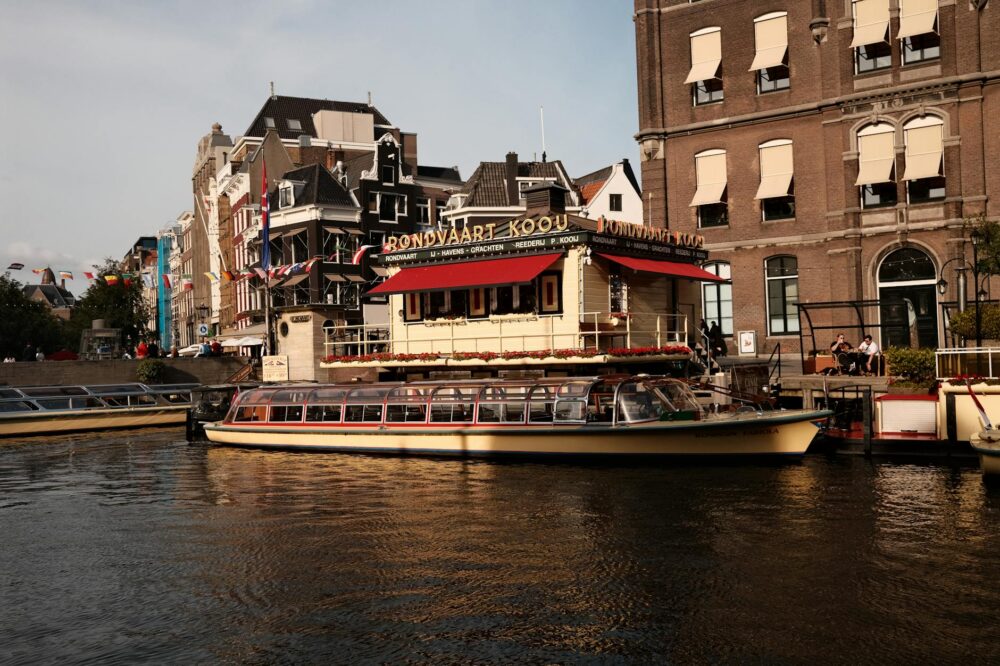
While not a practical mode of transport, a canal cruise is a must-do activity. Many companies offer hop-on-hop-off boat services that combine sightseeing with transport.
How to Choose: What Is the Best Way to Get Around Amsterdam for You?
Consider these factors when deciding:
- Budget: Walking and biking are cheapest; taxis and boats are priciest.
- Time: Bikes and trams are fast for medium distances; walking is slow.
- Distance: Walk for short distances (under 2 km), bike or tram for medium, metro/train for long.
- Weather: On rainy days, trams and metros are best.
- Local experience: Biking gives you the authentic Amsterdam feel.
Multi-Modal Travel: The Smartest Approach
Most visitors combine several modes. For example, walk from your hotel to a tram stop, take the tram to the museum quarter, then bike to the Jordaan for dinner. A day pass for GVB (Amsterdam’s public transport company) costs €9 for 24 hours and covers trams, buses, and metros. Add a bike rental for a day, and you’re set.
Conclusion
So, what is the best way to get around Amsterdam? For most travelers, the answer is a mix of biking and public transport. Biking offers freedom and speed, while trams and metros provide comfort and coverage. Walking is perfect for the historic core, and ferries add a free scenic bonus. Avoid cars, embrace the bike culture, and you’ll navigate Amsterdam like a pro. Plan your route based on your itinerary, and enjoy the city’s vibrant streets and canals.
Remember: the best way to get around Amsterdam is the one that fits your style and schedule. Try different modes, and you’ll discover why this city is a global leader in sustainable urban mobility.


I’m planning a trip to Amsterdam and wondering if renting a bike is safe for a tourist who hasn’t cycled in a busy city before. Any advice?
It’s generally safe if you follow a few rules: stick to bike lanes, use hand signals, obey traffic lights, and watch out for tram tracks. Start on quieter streets to get comfortable, and always lock your bike securely. Many tourists cycle without issues, but if you’re nervous, walking or trams might be better.
The article mentions trams are efficient, but how do I buy tickets as a tourist? I don’t want to get fined.
You can buy a disposable ticket at ticket machines or tram stops, valid for 1 hour (€3.20) or 1–7 days. Alternatively, get an OV-chipkaart (€7.50 + credit) and tap in/out. Always check in at the card reader inside the tram. Avoid riding without a valid ticket, as fines are steep.
I’ll be staying near the Museumplein. Is walking enough to see the main sights, or should I get a tram pass?
Walking is perfect for the Museumplein area, as the Rijksmuseum, Van Gogh Museum, and Stedelijk are all close. You can easily walk to the Canal Belt and Jordaan too. For longer trips like Central Station or the Noord, consider a tram or metro. A 1-day GVB pass (€9) might be handy if you plan to cover more ground.
Are the ferries really free? That sounds too good to be true! How often do they run?
Yes, the ferries across the IJ are completely free and run frequently—every few minutes during the day, and less often at night. The main route from Central Station to Buiksloterweg operates 24/7. They’re a great way to reach Noord attractions like the A’DAM Lookout. Just walk on and enjoy the ride!